

WHO'S THAT? Rentboy

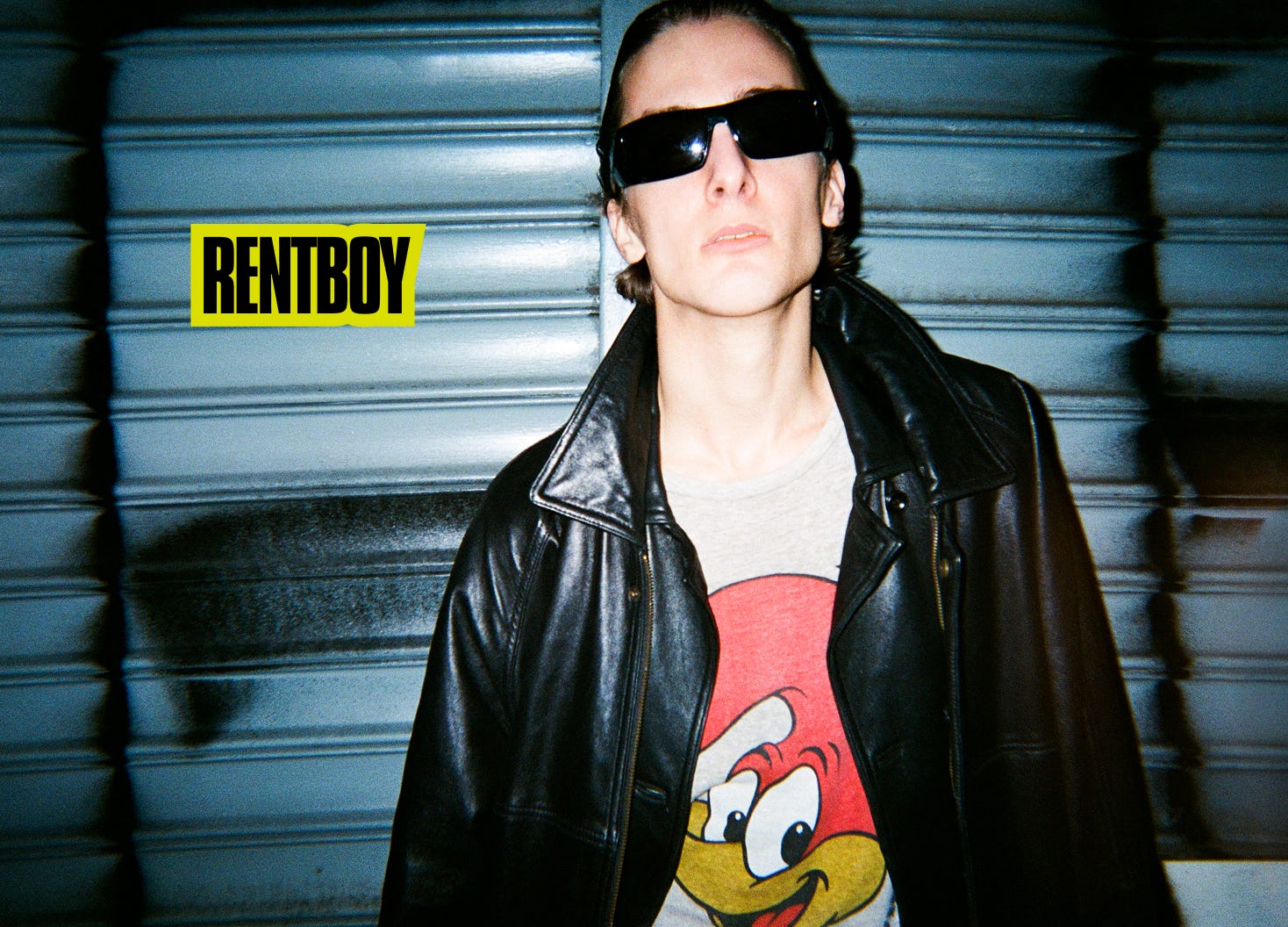
Rentboy’s “Pussy on the Floor” sounds like a viral smash biding its time. With the grit of underground dirt floor gay bars and lyrical punch of algorithmic brain rot, the Philly rocker’s single feels engineered for explosion. “You are listening to ‘Pussy on the Floor,’ it’s a hit around the world. I know you’ve heard it before,” he insists, as the chorus detonates into a hook you’ll want to shout back at him again and again.
His 2025 Day Jobs for Night People EP extends this unapologetically queer, DIY dance floor ethos, opening boldly on its title track: “This one is for the girls and gays, who work nights and don’t believe in days.” If Rentboy’s world has sun, it only comes up after last call.
I first saw Rentboy this summer open for Jack Powers at Night Club 101. He performed alone in a spaghetti-strap mini dress with karaoke-style lyrics projected behind him — simple, effective and quietly provocative. Months later, he hopped on a train into NYC to meet me at a Chinatown coffee shop. We talked about Peaches’ lasting influence, The Queen’s Ball by Copi and why his next ambition is infiltrating pop music from the inside out.
How was your day?
It was a bit intense. I was at my partner’s dad’s funeral yesterday. I will say that I slayed it. I played a stunning piano cover of “Thunder Road” by Bruce Springsteen. They’re Irish Catholics, huge Bruce Springsteen fans. I had never listened to him until like a month ago. A) He was so hot in the ’70s. B) His writing is so fucking good. So yeah, that was my portion.
That’s beautiful, but also sad. I’m so sorry.
It’s been a cover-heavy weekend. I played a fundraiser for The Trevor Project on Friday night in Philly and did “Brass in Pocket” by The Pretenders. It was one of those Halloween karaoke shows, Lilith Fair-themed. I’m having a solid run of covers, right now.
So do you have a performance background? You play several instruments?
I can play piano, I’m self-taught — but I started playing bass when I was 12 years old, because you get exposed to the Beatles and then that’s your whole world. I just wanted to play in bands. But yeah, I play bass guitar, I produce, I write songs.
You do it all.
She can do it all.
Did you grow up in Philly?
No, I grew up in Maryland. I moved to Philly because some friends that I was making music with moved there. I’m really glad I did, and it’ll be 10 years of both the project and living there in May.
I always admire people doing amazing things in cities outside of NYC or LA.
You meet a wider variety of people because it’s such a working class city in Philadelphia, and there’s a lot more possibility. I was thinking about this in relation to James Murphy and DFA records. The reason that was able to actually happen in the early 2000s is because he was able to, like, rent a studio in Dumbo for $300 a month. [Laughs] You can’t do that anymore. Philadelphia, we don’t have money, but we have willpower and spirit. There’s something, especially about rock music, that calls for that in a lot of ways. I wouldn’t consider myself a pop musician at the end of the day. I’m a rocker. It may not look like that, I’m not MJ Lenderman, but I’m trying to do something that’s very specifically in a gay lineage.
What is the general music scene like in Philly?
It’s interesting, because we’ve honestly been the trendsetters for everything that’s happening in indie rock, right now. We pioneered the shoegaze boom. We pioneered alt-country, that all came from West Philly. And I’ve never fit into that, really. I think it’s because of who I am and I’m willing to accept that. I’m still in community with these people, obviously, but I have to do my own thing. And DIY, at the end of the day, it’s a method. I don’t want to sound like Liz Phair, I want to do my own thing and represent the things that are important to me. I always think it’s more important to bring what’s different in you to the table, rather than try to conform to anything else.
What’s the relationship between the music you make and those different local communities?
I made “Pussy on the Floor” with my friend Nora, who’s in Chemical and Lust Orchid. So people are pretty open-minded when it comes to music. I’ve played a show with Tagabow before. I came up playing basement venues, that was my whole thing. And then I discovered dance music and house and all of that. When I grew up, dance music was very EDM bro, that kind of stuff. And when I finally found it wasn’t that — that disco and house and all these things were very queer and had a strong tradition behind them, I was like, Oh, sick. What if I do that in the basement? Do it DIY, have everybody play samplers and synths. So that was an exciting part of this project for me.
Did you discover dance music by going out?
Yeah.
When did that happen? Because I listened to your oldest song on Spotify–
Which one was it? I forget.
“Conveyor” off 2020’s Pay My Rent? And it’s a very different vibe.
Oh, that was so old. I made that in 2018 and it goes back even further if you go on Bandcamp. And I’ve scrubbed some things–
Which is inevitable.
But now I don’t want to delete anything, because I believe there’s something really important in taking the risk of being embarrassed. I think that’s everything right now, especially in the genre that I work within. A lot of people are trying a bit too hard to be cool, rather than looking at the genre and being like, This is an excuse for me to do what might be embarrassing, but really is impactful.
The act of making and releasing music is, inevitably, a little bit embarrassing.
Oh yeah, it’s cringe as hell.
[Laughs] But it’s cooler to just embrace all of that, especially now. It’s interesting, listening to those early songs, I was thinking it sounded like you hadn’t yet discovered dance music at that point. Now everything feels like a bridge between both. When did that happen and was that in Philly?
It did happen in Philly. I was going to a lot of warehouse raves, I had a lot of friends who were DJs. I think the transition was from rock music, which is music that you put on a turntable and you sit down and listen, and that’s their relationship. And then once you start hanging out with DJs, drag performers, comedians, all these nightlife people, it becomes something a lot larger than that. It’s about building a world and having the music be something people interact with. I’m actually excited, because somebody that found “Pussy on the Floor” on TikTok did a routine to it. For the first time, to just see a room full of people that I don’t know yelling at this performer to put her pussy on the floor, I thought that was amazing. I really want to make something that’s functional at the end of the day.
And involves lots of people, or it’s community building or interactive. But that’s what’s fun about “Pussy on the Floor,” the music video and all your TikToks are forcing a trend that doesn’t yet exist.
Glam rock, I feel, is full of artists like this: David Bowie or T. Rex. You have to believe that you’re something before you become it. I think that’s really beautiful. Obviously, Gaga did that really well. But I love the idea of pretending that something is already there. You’ve watched the music video, right?
Yes, it’s so good. I sent it to so many people, because it’s really smart and funny and you just look fucking cool.
Thanks. [Laughs]
It’s all the things you’d want combined.
We were really inspired by Ryan Trecartin, the video artist — just this state of absurdity where nothing means anything anymore. I don’t know, why not put your pussy on the floor? I made it with my friend Chris [Osborne], who’s a really talented filmmaker. She actually worked on the Zohran campaign, making all the little videos. We wanted to have something that felt more true to what the internet is like now and not something that’s super retro. In Ryan’s work, I see a lot of that, pushing forward to the future. A lot of people are very stuck in being retro or having a certain Y2K aesthetic, but I wanted something that felt very now.
Yeah, it looks exactly how the world feels today — that excessive, chaotic consumption.
Everybody’s fried, everybody’s brains are fried.
[Laughs] It’s very true.
But you can build something out of that.
You said you made the video for $400?
And honestly, $160 worth of that was buying chain, which is very expensive because of the tariffs. And three different fleshlights, they’re only in one shot. I was imagining this future in which it’s become such a huge song that, literally, putting your pussy on the floor and dragging it around becomes a status symbol. We were playing with that.
I guess fleshlights are expensive.
It was like $30 for one.
So talk me through creating “Pussy on the Floor.” What does it mean? Anything at all?
I heard about this girl, she put her pussy on the floor. Then she surgically removed it and put it on the floor. And I was like, Damn, I don’t know where she got it, it’s probably at the store. I should ask her how to put my pussy on the floor. And she responded, It’s so easy that you slide it out like this. And that I could use my hand or my fist. And I should probably bring a camera, because I’d never really seen anybody do it like this.
Right, right. [Laughs]
So that happened, then I recorded the demo. It was like 25 degrees. It was this past December in this huge industrial warehouse where all the metal and shoe gaze bands rehearse. Our fingers were frozen, all the instruments kept going out of tune. We recorded direct to a tape machine with a tape she had stolen from Temple Medical Library. So when you played the end of the tape, it started talking about different kinds of surgery, which I felt was really fitting. And then as soon as I debuted it live in North Carolina at this tiny, really cool gay club called Club ERA, I knew it had to be a single because that was the first time anybody had ever shouted back something that I’d written without having heard it.
That’s how you know it’s a good song. I saw you perform it opening for Jack Powers earlier this year at Night Club 101 — and it’s true, by the second chorus you’re screaming the words back.
It’s a teachable moment.
I was like, I don’t know what this means exactly, but I like it. [Laughs]
I had been reading over that winter, trying to sort of trace the lineage — like, I grew up reading William Burroughs and that kind of gay literature. With this one I was reading The Queen’s Ball by Copi and it’s describing all these people changing their gender, changing their life. They move to Ibiza, all the kids get eaten by sharks, everybody’s on acid all the time. It’s serious, but it’s not self-serious. I found this older way of being gay that also feels very contemporary at the same time, so I was very inspired by that. And also this writer, Guillaume Dustan — in one of his books, he said that description is the key to providing dignity to anything and I think we could all use a little bit more of that in these times. Living in this country sucks, you know? [Laughs]
It’s true. I love the shamelessness of your approach to promoting “Pussy on the Floor” on TikTok. Because that is what we’re told to do, but it also worked in the creative context of the song.
I don’t think it was particularly prefigured, but I just understood what was required of me. I mean, that’s really the only path forward as a musician now. Everybody’s so in their phones that to get to anybody, you have to just be churning out algorithmic content. And the idea of making something that feels almost like a virus, but it’s a song that can hop from people to people that has some kind of functional aspect to it is really powerful. And as I’ve said before, I’m not worried about being embarrassed or people thinking I’m lame. I know I’m not lame. I know that what I do is cool as hell and I’m not even worried about it anymore. Too many people are too hung up on that kind of stuff, and right now what’s important is to put yourself out there — especially if you’re queer.
I agree.
They’re trying to get us to erase ourselves and that’s what I’ve seen in myself whenever I’ve been the most afraid, is just this desire to get rid of yourself. By sticking around and putting yourself out there relentlessly without shame, that’s the biggest part.
And over and over and over–
And over and over, you got to put it on the floor.
When I was Googling you on the way over, the search “Rentboy” just got me information on male escort-related information. So I was unsuccessful in reading up on any background information about you. [Laughs]
Oh, damn. I mean, maybe it wasn’t the most SEO-friendly.
But it’s such a good name. When did you pick it?
It was 2016.
So it has been a long time.
It has been a long time. I’ve been doing this for a while. I really wanted to be a gay punk and I was, at the time, reading a lot of Gary Indiana, so it’s named after his novella, Rent Boy. And it just sort of went on from there. Again, it was probably a bad decision in terms of actually searching for anything, because then you’ll get interviews of sex workers, but I think that’s fab. I’m really unbothered with trying to be respectable to straight people, right now. But that’s definitely hung me up in the past, especially when you make rock music, because the lineage is so heterosexual that you really have to break out of that. I’m a faggot. You can take me or you can leave me, and I don’t care.
You’ve stayed in Philly a long time, so is that where you feel most comfortable?
I love it, I’m a lifer at this point. It would have made a lot more sense, career-wise, for me to move to LA or New York. But I feel like people in my parents’ generation live that way, always moving from one place to the other, getting this job or that job, and I just don’t think that’s a very satisfying way of living for me. And for what it’s worth, I feel that I’ve done pretty well in terms of reaching out. I worked in fashion for a little while, doing runways for Celine. People have reached out to me, and I didn’t feel the need to move to New York and chase some idea of making it. I’d rather build something where I know I can, instead of hustling for people’s approval. I feel that I’m really able to make something happen because I have the willpower.
I’m sure it’s more sustainable in terms of the actual music-making process, because that can be so expensive. But also, I’d imagine you have more space and time in general to really think about what you want to create.
I would not be nearly as developed as an artist if I had lived in New York. I had a whole period of six or seven years where I was paying, like, $400 a month in rent. That’s changed now, because even in Philly, it is getting squeezed in similar ways to New York, but it’s nowhere near as intense. I have a really good life for myself and that’s really what this is about at the end of the day: building something. It’s not about trying to be cool with anybody else.
And also building something that is exactly the way you want.
I refuse to compromise. [Laughs] And that’s served me well in terms of building a project that I can be really proud of and that actually says something.
How important is humor in your songwriting? Because some of it is very funny.
Especially in the 2010s there was a whole genre of gay singer-songwriters who were very much like, I’m sad, I’m suburban, I’m depressed. Love me. And I did that for a time, but I didn’t find it to be very satisfying. What’s important to me is that we get together and fuck it up, for lack of a better word.
I love “Day Jobs for Night People,” which is the title track of your EP. When did you make those songs?
Those songs were made in the first half of 2024 with my friend Gavin Oswald, who’s a great producer. That was the start of me trying really hard to write from real life and not embellish things — to not try and be poetic or self-serious, but just to state how things are and not care so much of whether it’s artful.
That’s why I love it. The people you describe in that song, I am very familiar with all those archetypes and habits. Sometimes it’s nice to just capture the world exactly as it is and organize that into a song.
I don’t want to try and be esoteric for its own sake. There’s a lot of people who do that to impress other people. I’m really inspired by Jarvis Cocker, the band Pulp. He really captured being working class and partying, basically. And that was what I was trying to capture with that EP, all these people in Philly who have to work day jobs, but also want to be night people.
Partying becomes more meaningful when you don’t have access to everything you want — you don’t have tons of money, nobody is there taking your picture, there aren’t celebrities or lists.
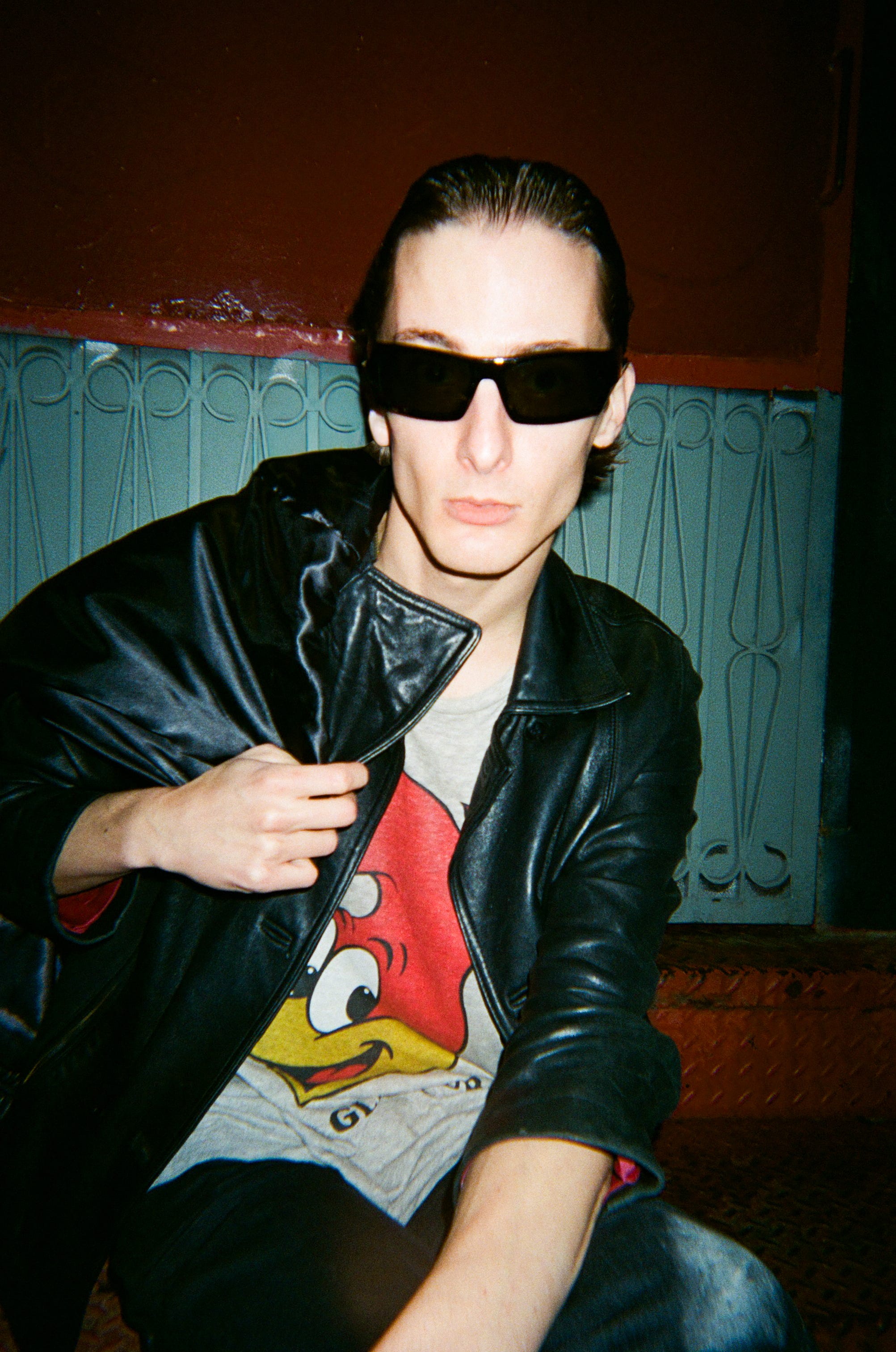
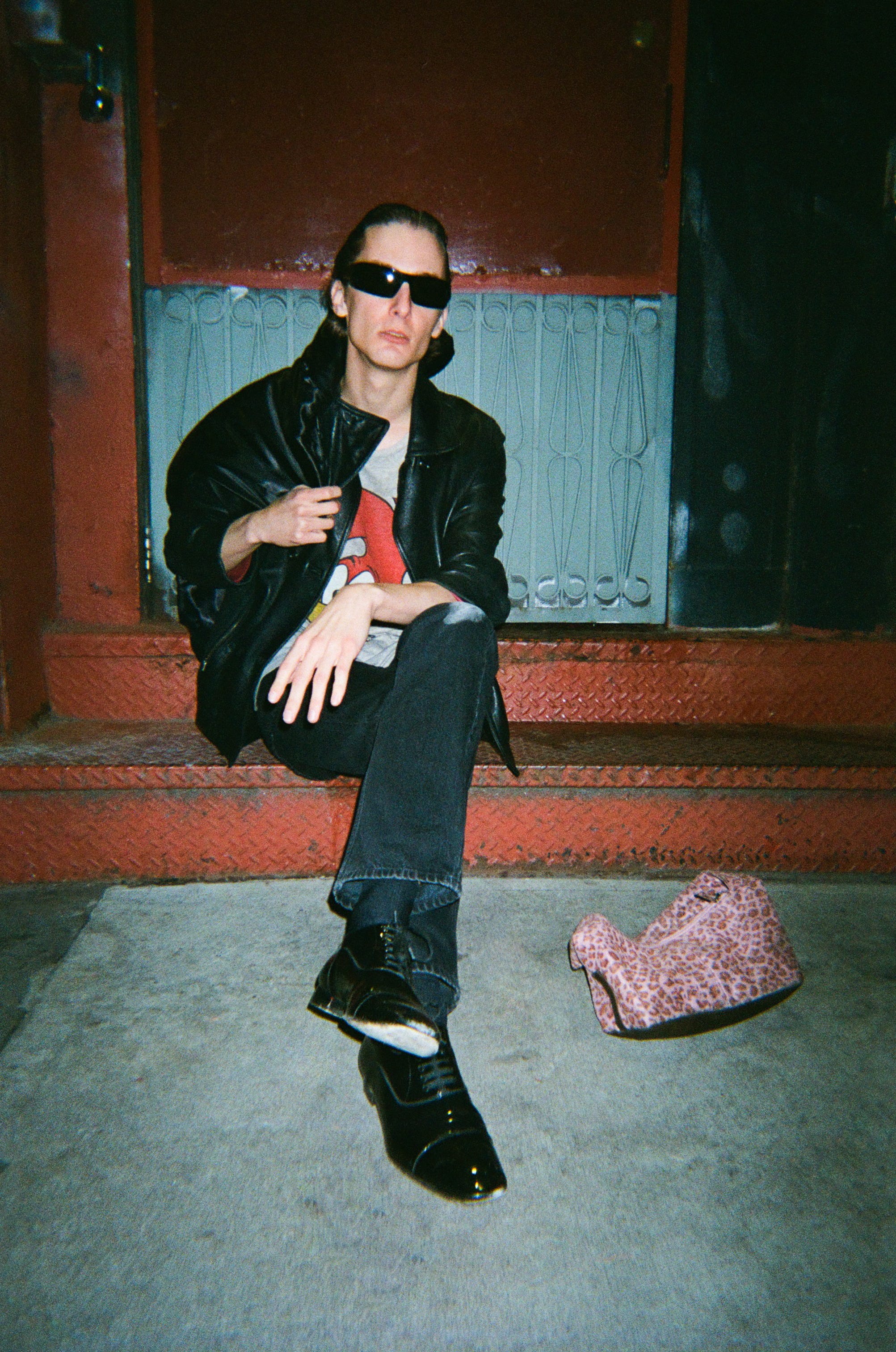
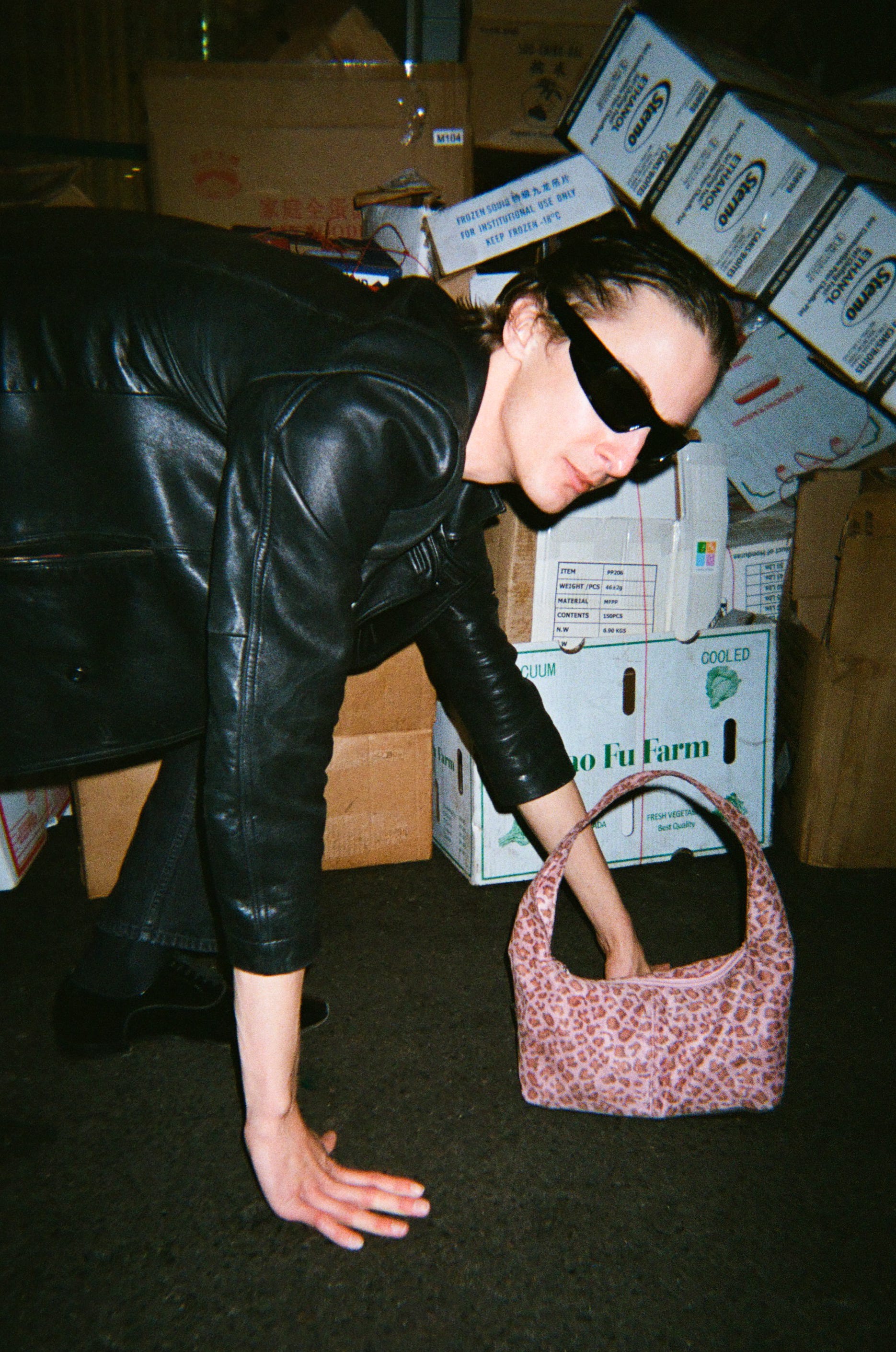
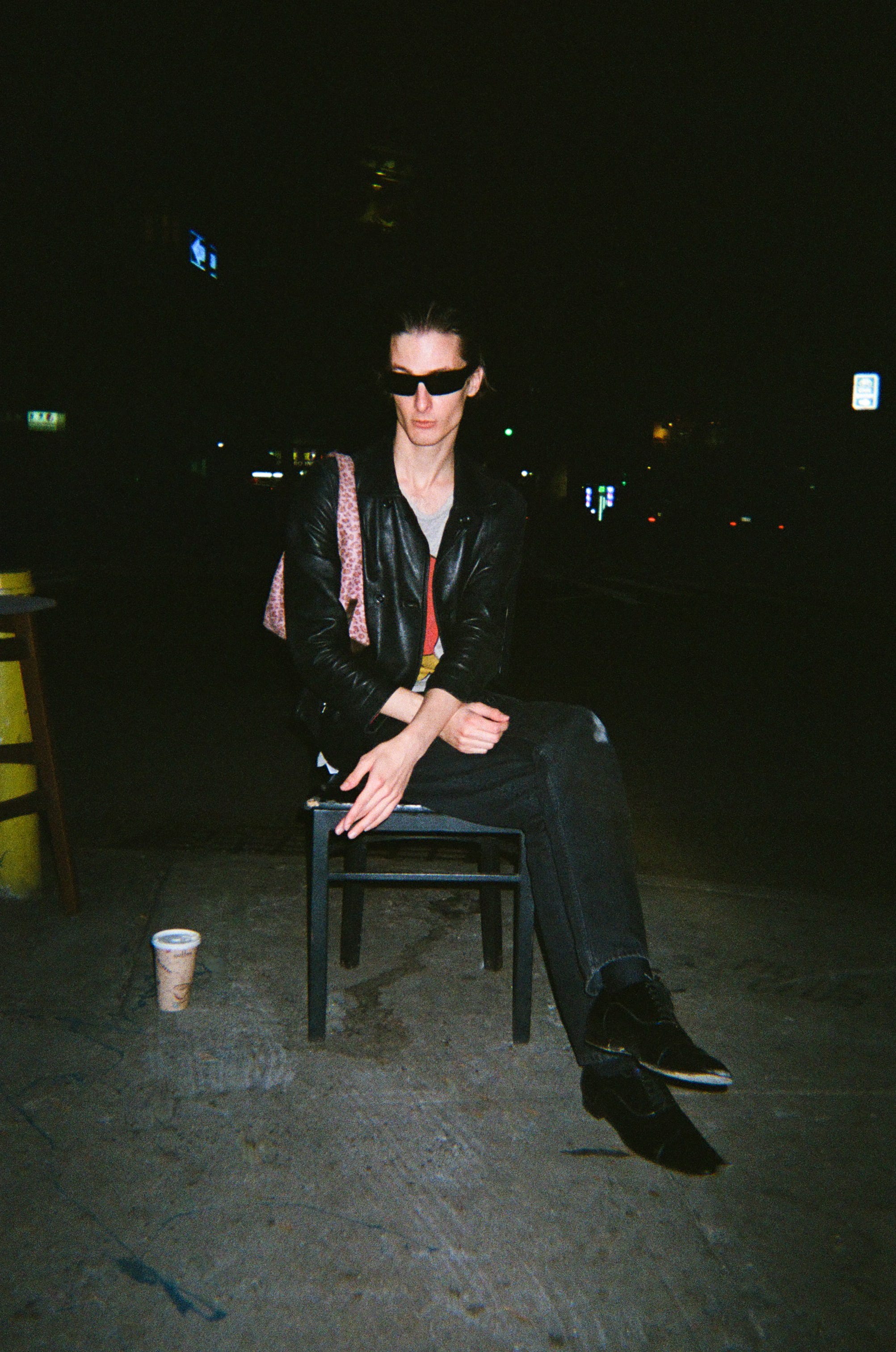
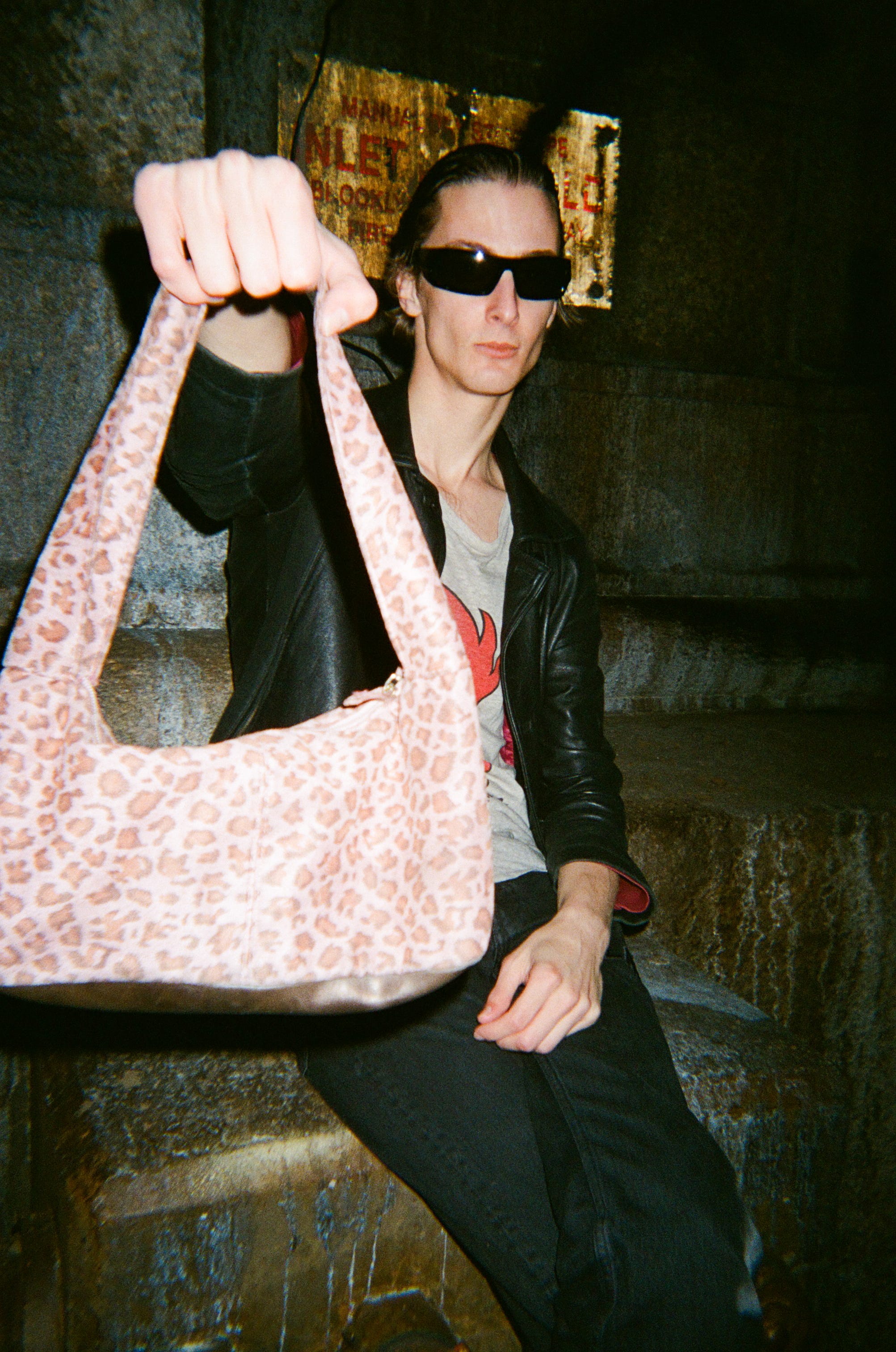
There’s no money in nightlife in Philadelphia, there isn’t a nightlife economy like in New York, which, on the one hand, is sad, because it’s difficult to build anything, to make anything last, but it also engenders a sort of ingenuity and creativity. I’d imagine that what I’m doing is some kind of thrift store adjacent glam rock. I don’t have money for clothes. Literally, this was free. I got this at a clothing swap. This was free. This was free. The only thing I paid for are these Louboutins, which I paid for $60. Oh, and this is $7 for a handbag, so that’s pretty good.
[Laughs] I love that bag. What’s the best party you’ve been to in Philly?
I got sober a little over a year ago, so I haven’t been partying as much. I’ve also been really dedicated to my craft in the past year. I remember, I went to a rave in this place called Bartram’s Garden in southwest Philly, which is a little off the beaten track. They had a huge PA, DJs. It was people as far as you could see in this wooded area. I was with my friend and they said, Look, there’s a campfire over there. Let’s go to it. And all of a sudden, all these people start running away. And I’m like, What could it be? It turns out it was a tire fire. Everybody just en masse, running away. The police are coming. Everything is super outside or underground. There are no real venues.
What’s a tire fire?
Somebody lit a tire on fire and threw it. There’s a lot of crust punks and anarchists.
Is that a common thing? A tire fire?
Why not?
You mentioned it so casually, I’ve never heard of that. [Laughs]
My favorite bar to go to is The Bike Stop. Have you heard about it?
I haven’t.
Imagine if The Eagle had no money. The basement has a dirt floor. I really like any place that feels sexual and alive.
With a dirt floor.
With a dirt floor.
I think that’s better.
One of the only after hours spots in Philadelphia is illegally inside of an auto body shop by day. Super tiny dance area, sort of a coke den. I spent probably a little bit too much time there before I cleaned up my act. [Laughs]
Too much time in the den.
Yeah, you meet a lot of weird people.
I’m sure. Going back to this last project, “Pure Evil” stands out. I love that song.
I get to be really bitchy, I think that’s important.
Is it about someone in particular or just a larger idea?
It’s a type of person that you see everywhere. I’m trying to think back to when I was making it. There are just certain people you get really irritated with in nightlife. I find myself doing this a lot in songs. I had never actually seen a Wim Wenders movie, but I’m accusing somebody like, I bet you’ve never seen Wim Wenders, sort of playing with those things.
When you’re writing these songs, are you sitting with someone and workshopping everything? What is that process like?
I write all the lyrics and structure them. I really like having other musicians on my tracks, because it adds a lot of life. I’m sort of the ideas person, but I can produce. I love writing songs with people, that’s one of the best ways to spend an afternoon. You really get to know how somebody ticks. I’d love to do pop writing, that’s probably the next thing I want to get into.
Have you done anything similar to that? And when you say pop writing, what do you mean?
Just getting into writers’ rooms with people. I’ve done it exactly once, because there’s none of that in Philadelphia. And it didn’t go well. [Laughs] I’m not gonna spill who it was, but it was at a studio and this person who will remain nameless was like, I want to do something more electronic. So I played “Born Slippy” by Underworld for the people who had assembled and they were like, Yeah. Then over time, you just see something gradually get whittled down. I like pop music that’s very extreme. I don’t like things that are middle of the road or that you could hear in a department store. And I don’t plan on my music being like, Let’s all gather around. We’re a nice middle class family.
What’s an example of extreme pop that you admire?
Peaches, obviously.
She’s the ultimate.
She did it. I find her endlessly inspiring, just how forward with sex she is. I mean, you go back to rock music in the ’50s, it wasn’t anybody trying to be philosophical. It was just songs about having sex, having nice shoes and driving around in your car. America is so alienated right now, it’s good to be dignifying those things. So what if we want to go out and dance and get laid? That’s a perfectly fine thing to write about. It doesn’t have to be elevated, per se, but to take it seriously.
That’s especially important as we gradually become such a sanitized country. Sanitization is the antithesis to the human experience, so it blows my mind that we’ve arrived here.
My cover art got censored, it’s not on Apple Music. The one you see on Spotify is the fourth round of cover art that I did. Originally, I just wanted it to be a fleshlight. They shot it down. I said, Okay, I’ll pixelate it. Shot that down. Who the fuck are we trying to protect by censoring ourselves?
A fleshlight is also not real. It’s an object.
It’s not real. [Laughs] But I did get the last laugh because there was a site I found where people who are really into using fleshlights are ranking the inside textures of them, and they have all the images. I just took one of those and slapped it on the cover, so they would never know. But pleasure is important. I feel like in the 2010s it got a bit overplayed, but I think right now it actually is important. We’re living under incipient fascism, if we’re not already there. These people are terrified of their own bodies. So yeah, I love Peaches so much. She’s definitely somebody that’s influenced me very heavily. I especially love that her first two albums are entirely produced by her, just like an SP-505 sampler. That gives you a certain freedom, she was presaging what a lot of people are doing now with their laptops.
And it has that raw, imperfect quality, like real rock music.
She’s a fucking rock star. There’s a lot of music right now that sounds really good in your headphones, but I want to make something that has a rawness and edginess. When I was growing up, I loved garage rock of the ’60s and ’70s, first wave punk. And I think bringing that sensibility to queer people is really important to keep it alive. I mean, that’s what The B-52’s did. I see Peaches in that, I see Le Tigre, a lot of people.
The set I saw in New York was just you alone on stage. In your mind, is that the show? Or would you ever picture this with a bigger band?
I’ve done a larger band before. The lineup before this was me on bass and singing, two guitarists and a drummer. It was very Strokes, everybody wore black and white. We played in art galleries and shit. It was very stripped down and intense. I still took some of that energy, but now I’m doing it through electronic drones. It’s really important that things are mobile and adaptable to spaces. Keeping music to music venues kills it in a certain way. My favorite shows I’ve played have been at drag events or gay bars or things that aren’t an indie rock venue where everybody’s gonna sit there, fold their hands and then clap at the end. That doesn’t do anything.
You had the lyrics for every song scrolling on a screen behind you, which I thought was very smart. I love your little dress, too. It was a very simple show, but that made it all feel more confident.
That’s a problem with playing a lot of venues that aren’t music venues. If you play the guitar and you want people to hear you, you turn it up. A lot of these venues don’t have a good PA system, like gay bars aren’t investing in their speaker systems. You need to let people know what you’re actually saying, because they might not hear it. I’m proud of my lyrics, I think I’m a pretty good lyric writer.
Especially getting in front of an audience where you can largely assume this is their first time experiencing you, having all those lyrics on display is helpful for everyone to connect with the music. And the dress you wore on stage, you also wore in the “Pussy on the Floor” video. It’s all connected.
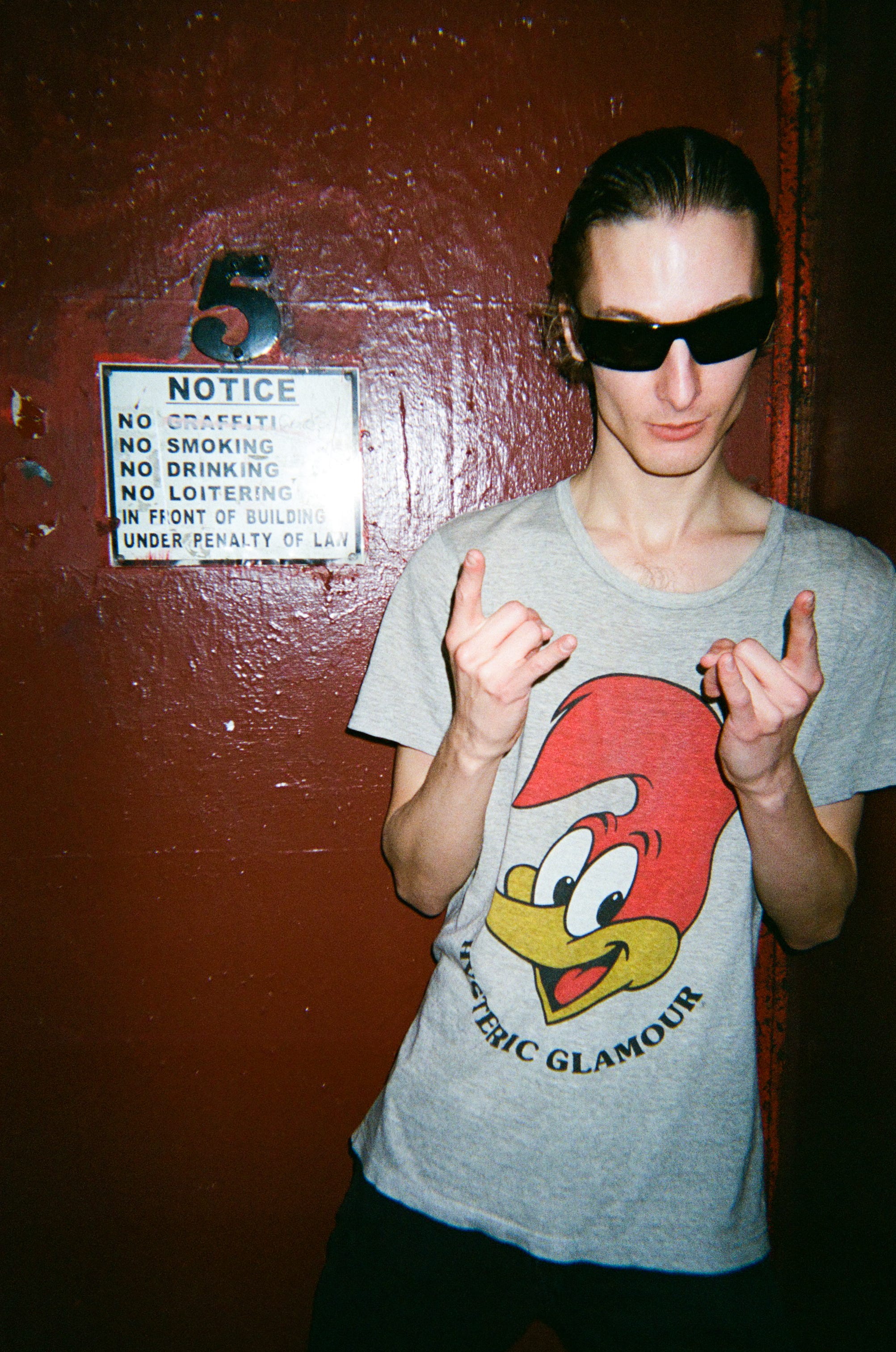
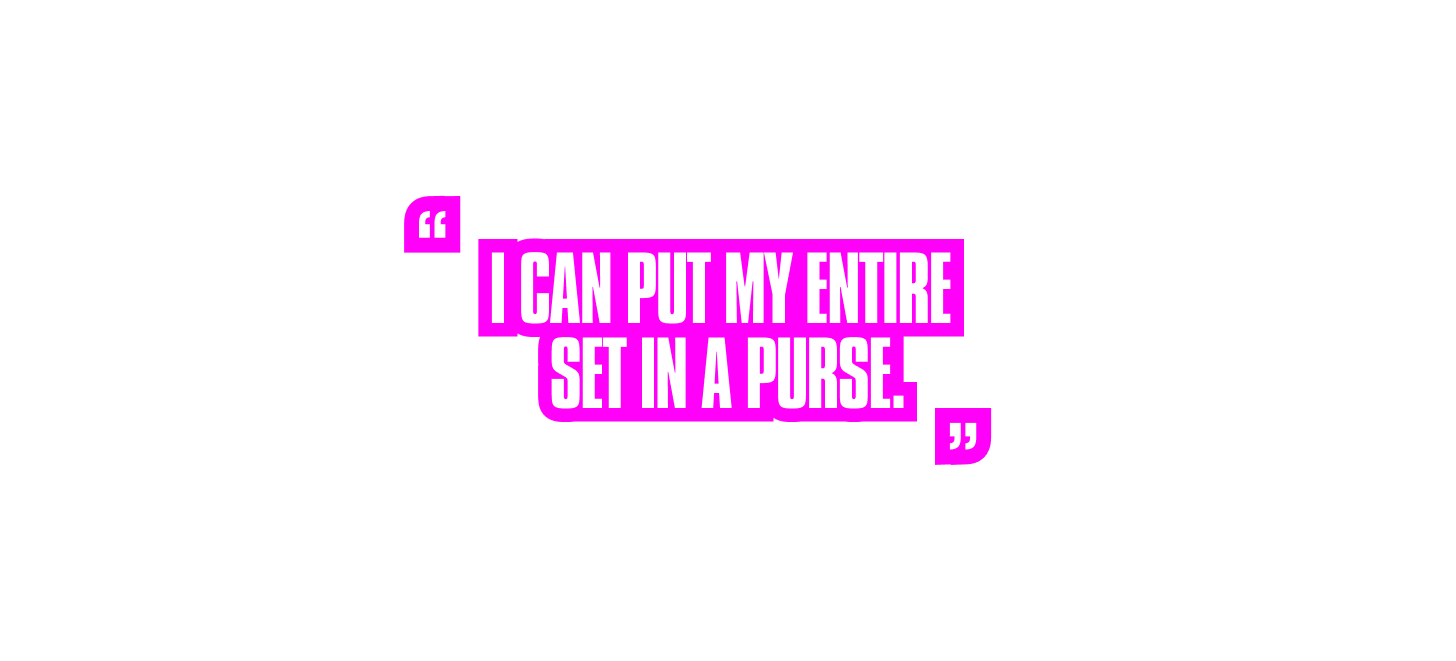
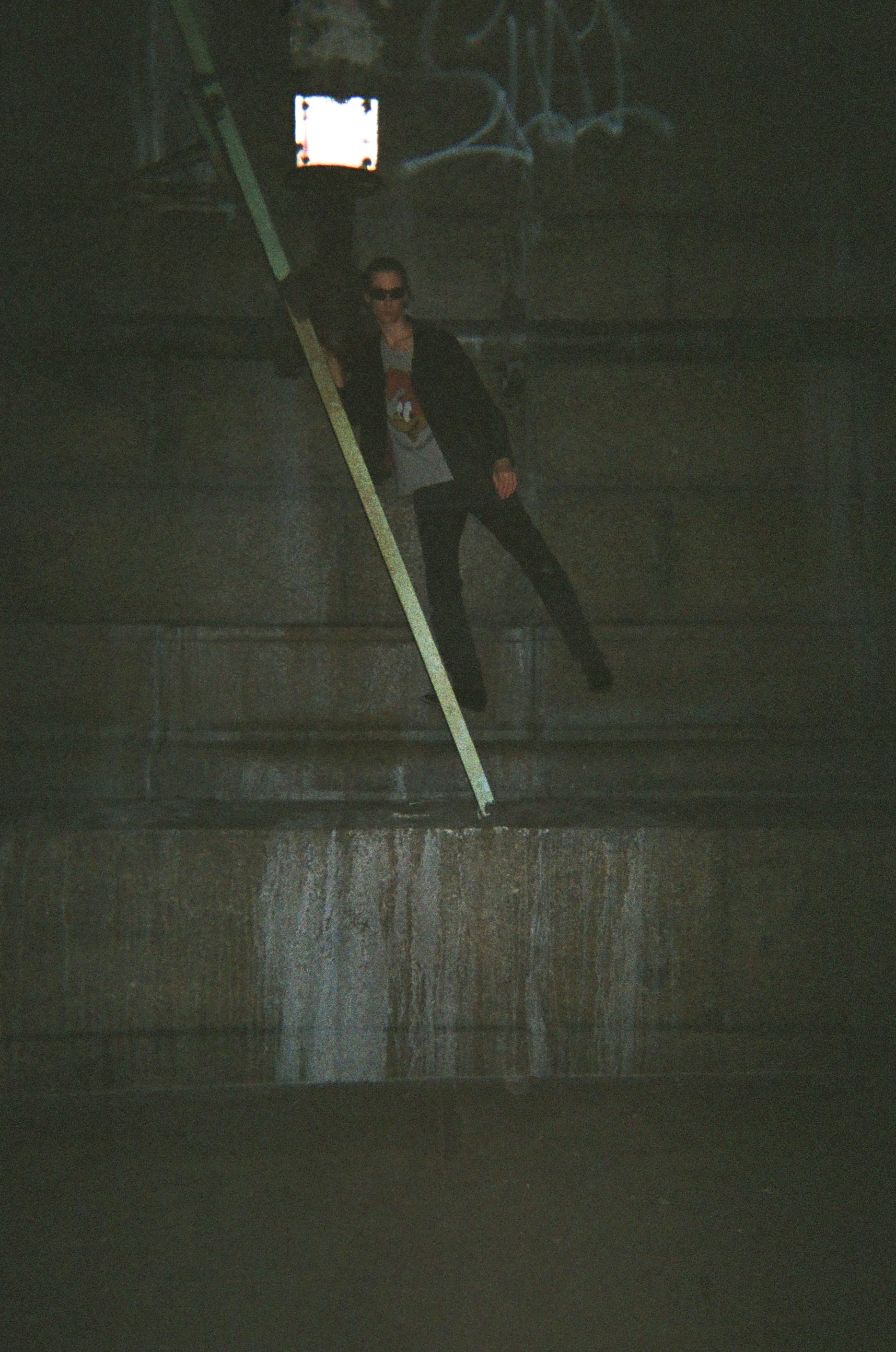
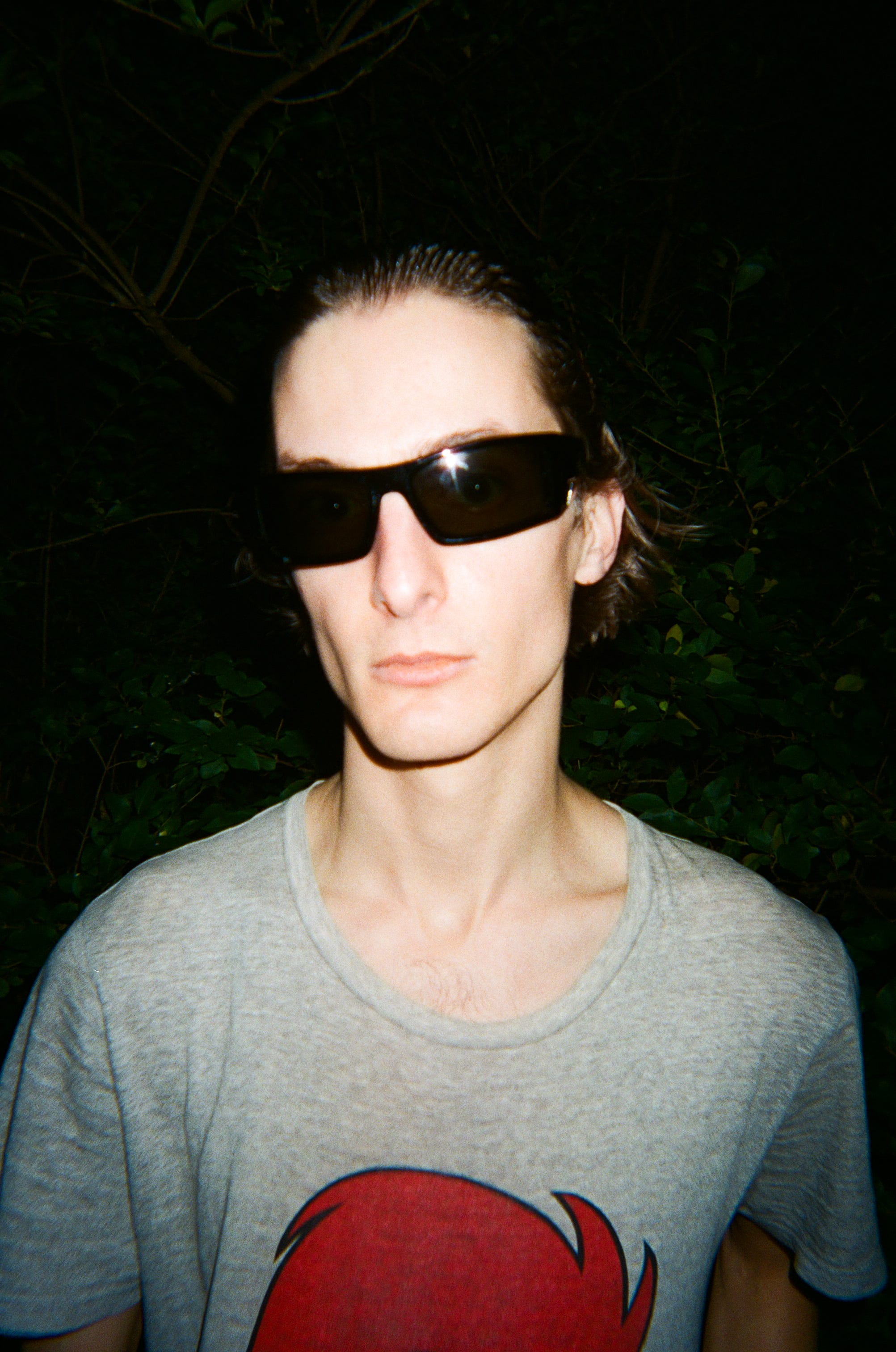
I literally have it in my purse right here. See, that’s the thing. I can put my entire set in a purse. I have a USB stick, a passport, a dress and a pair of sunglasses in this bag. When I want to go into Rentboy mode, I can do it. I got the dress from my friend Connor, he gave me a deal on it. I’ve worn it literally every single show — these shoes, this dress, slick back hair, same pair of sunglasses, every single time. I think being a character is important, or understanding that you are on the stage at the end of the day — that it isn’t exactly you, but an elevated version.
Are you always writing new songs?
I have most of an album written at this point. I don’t want to give too much away, but it’s definitely a progression. I’m inspired by working with structure a little bit more and making things that are a bit dancier. I love the first LCD Soundsystem record for that reason, something like “Beat Connection” or “Yeah” — these long evolving, less strummy and more physical motion songs.
What does success look like for you? Especially since we talked a lot about maintaining this authentic relationship to underground spaces and queer communities. Are you interested in scaling everything? Do you care?
I mean, I do care. Anybody would be lying if they said they didn’t want their music to impact culture, to reach kids that are out there. I would have liked to have heard my music if I were a teenager, to have some model of what I could be. And I’d like to think that teenage Bobby would be proud of Bobby right now. But in terms of scaling, keeping things DIY and mobile, that’s important to me — and I’d love to write for pop artists, honestly. I really like Dua Lipa. But just making pop music, because I think it’s important. Does that answer your question?
It does, yeah.
I haven’t honestly given it too much thought, because I’m pretty in the middle of actually doing the work.
I love the idea of you becoming massive, just as long as everything can still fit in your purse.
It’s like guerrilla warfare, but for militant homosexuality. [Laughs]
Interview & Photos: Justin Moran
Art Direction & Design: Zach Pacheco