

WHO'S THAT? Daya

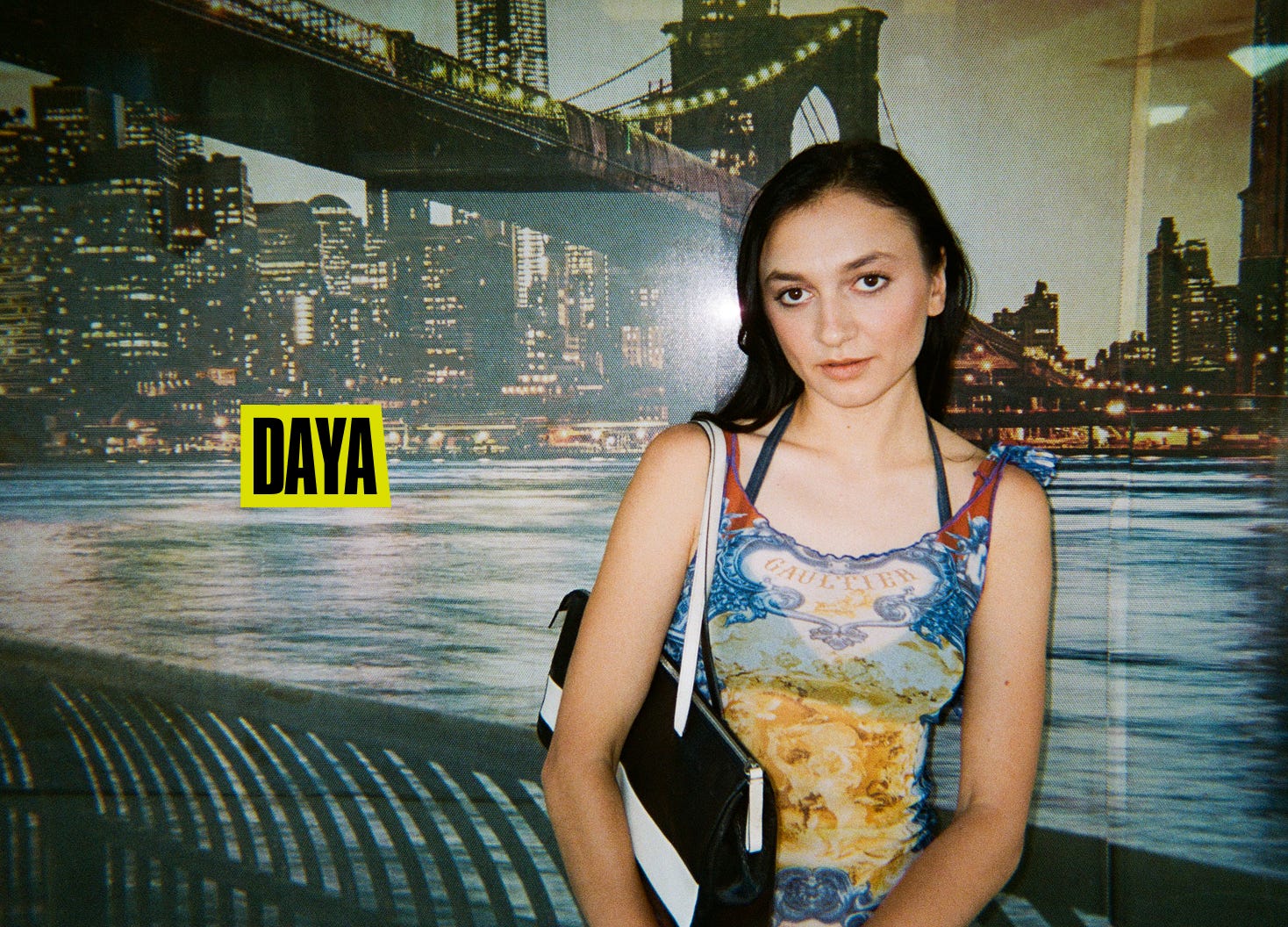
You’ve heard Daya’s voice everywhere for years — but you’ve never really known her. The Grammy-winning artist’s first album in nearly a decade, Til Every Petal Drops, chronicles the growing pains of her twenties — charging headfirst through love, heartbreak and identity. From the confrontational “Matador” to the brutally honest “Losing a Friend,” Daya now writes as someone who’s lived every lyric.
Daya and I met at a coffee shop in her new neighborhood, Greenpoint, where she’s settled after a move from LA (she’s “always romanticized” New York). We talked about unlearning the rules Daya once mastered in pop’s industry bootcamp — and the self-actualization that comes with finding your sense of self after early success.

You just moved to New York, how are you liking it?
I got my place in December. I’ve been traveling so much this year, I really haven’t been there. This is the first month I’m fully settling, but I love it. I grew up in Pittsburgh, so East Coast people speak to me. I love the pacing, I love that everyone’s seeing and doing the same thing. I like LA, you can all live very different lives, but–
It’s more isolated, which is good and bad. Here you’re just thrown in with everyone and I’d imagine that’s refreshing after eight years of LA life.
Totally. I knew I would love New York, I’ve always romanticized it.
Did you have a good summer?
I did, I was traveling a lot. I was playing shows and then I went to Sweden to do some writing, finishing up the album.
Which part were you in?
Stockholm.
The pop music capital.
Pop music capital, yes. I really am a disciple of Stockholm at this point, trying to spread the pop word.
It’s such a clean place.
I always feel like I’m breaking a rule when I’m there.
Because everyone looks amazing, but also very uniform. The longer you spend there, you’re eventually like, Is something wrong with me? It’s very controlled, so it makes sense why so much pop music happens there.
And I think the winters contribute a lot to it. I was there in December two years ago and there’s nothing to do, except lock in and make things.
Were you there finishing up this album on your last trip?
I was working on a new project. [Laughs] I think most creatives feel this way, but once you hit a rhythm you have to ride that. I waited so long to find that and a lot of it was finding the right partners, label-wise, but I have the best team at this point. So far, it’s been amazing to roll out this album with them and feel so much creative freedom. I can work with who I want to work with, it’s the best case scenario. So once I found that and found the people I love writing with, I was like, Let’s keep going.
Did you make Til Every Petal Drops in LA, then? What was the time period of recording?
So that’s kind of funny, because it’s a collection of songs from the past. I want to say the oldest song is four years old, so it’s really all of these different moments collected together. And I didn’t intend to do that, it was just the songs that stood out over time to me — the ones I felt would still resonate years from now. There’s probably 10 different producers on it, but some of them came in after the fact and added to other songs. So it feels very cohesive to me. But yeah, most of it was made within the last two years between Stockholm and LA.
So it’s more like a snapshot of several years of life, versus one isolated experience with a small group of collaborators.
Yeah, which was cool to go back in and see how I haven’t changed. [Laughs] How I’m still the same bitch. Same mistakes, same old habits.
[Laughs] Yeah, ideally you’d want to go back and be like, Wow, I’ve grown and changed so much. But that’s not always the case.
I was surprised how the foreshadowing in a lot of the songs was definitely there. I haven’t released an album in nine years.
Which is so crazy. Did you put pressure on yourself to make something really major?
I think I just wanted to. I was like, I feel ready. I feel confident in my writing abilities at this point. I feel like I have the pop background. I have the speed dating, songwriting master class that I went through, basically, for the first four years of my career.
And when you say that, do you mean working with the biggest people in music?
Yeah, when I signed to a major after my first album, because the same four people worked on that album. And when I signed to a major, I was introduced to the whole: do the rounds, meet with different songwriters and producers every day — and the best songwriters at the time, which was so humbling. I had so many different thoughts on it, because at the time I was trying to find my own voice. I felt boxed in and I didn’t really feel the freedom to explore my weirder, less straightforward pop ideas. But it taught me so much and it was probably the quickest way to learn good pop songwriting, like how to write a good, catchy hook. Combining that knowledge with the unlearning I had to do to get back to the stuff that I’m naturally more interested in–
Your instincts.
Yeah, get back to my instincts and some of the stuff I was listening to when I was growing up, like alternative rock or more soulful, singer-songwriter stuff.
I would imagine that process was challenging. Was it harder to perfect pop music, in the way that you did, or was it harder to unlearn all those rules?
I was always one foot in a door. Like, Oh, these are really amazing writers and they have such good instincts. These are the best people I could be working with right now. But at the same time, I did have a feeling that my writing voice is gonna be what resonates the most. And as much as I can have the four best songwriters in the room who just wrote four different Top 40 hits, writing a song all together, which is insane, it’s never gonna be authentic to my experience that way. So I had that perspective, but I wasn’t confident in my ability to execute it in a polished and pop way. Even when I was like, Fuck traditional structure, or whatever, you’re still kind of referencing those things. You can’t ever really get away from that.
It’s in the back of your mind. Because I guess some people are making music without thinking about those structures at all, it’s not even a consideration.
That’s the North Star, that’s what you want to achieve: truly writing from the heart, a feeling or gut. Those people are really lucky. [Laughs]
Is it better to have huge success and then be like, Alright, I’ve done that, now I can just do my thing? Or is that huge success a burden that follows you around? And when I say, Huge success, I mean having songs that are ubiquitous with everything, like shopping at the grocery store and getting in an Uber, which is amazing because not many artists have that — but you do.
I feel so lucky for those moments, I can’t believe those were the first initiating moments in my career. It’s really hard to work from there. It’s a blessing and a curse. It opened the door to so many collaborations, working with the best songwriters, taking meetings with some of the best labels, but it also is so hard when you’re that young and your identity is wrapped up in it. You can’t fathom disappointing these people. I really internalized the expectations of myself after that. Like, “Don’t Let Me Down” won a Grammy. And so it was like, Okay, I have to write another song that’s gonna get nominated. It’s the same thing as structure, when you have those things in your mind when you’re creating, it’s hard to write the most authentic stuff and really dive in to find that voice. So yeah, it was hard, but not anything I regret going through. Champagne problems.
At some point you have to step outside of being in sessions to really live life and experience new things. That’s the solution to finding your inner voice. Looking back on the past decade, what was that process of making time for self-discovery?
That was what needed to happen. Ultimately, it was time. One of the reasons I love New York is I love being anonymous. I love going to the store and not caring about what I look like, and really living and experiencing as everyone else around me is. I have such a desire to travel and see new things, and experience and be present in my relationships too — present in my relationships with family. A lot of that was hard to keep up. I wasn’t very good at staying in contact with my friends from high school when I was traveling. It was impossible to bridge our worlds at that point, because I was living this dream and it felt like a movie. I didn’t feel like I could relate, I tried really hard for a long time. [Laughs] I wanted to go to prom.
It’s crazy this was all happening for you in high school. I didn’t realize you were so young.
Yeah, I was a junior and I took my senior year online. There was a lot of distance there, so I wanted to prioritize having connections with friends and family. I really hadn’t been in a long term relationship at that point, I was 16.
So you didn’t really know anything about love or heartbreak.
Yeah, I needed to go through falling in love, heartbreak, the whole thing.
Is there a song you made on this album where you feel like you landed in the sweet spot of understanding both sides of your background? That polished pop education with more honest storytelling?
Most of them feel like weird pop — pop with some weirdness, where you’re like, What’s going on there? That’s what I’m aiming for. I love the art of writing a good lyrical pop hook with a concept. I feel like a lot of them have that, like “Demise” and “Bandit,” they’re very conceptual. But then there’s some more psychedelic aspects, more exploration with electronic.
There are some weird choices throughout, but inside those weird choices there’ll be a melody that hits exactly the way you want it to. I love “Infrared” and how there’s a wild explosion of production in the last few seconds. When you were making this music with people, what was the process of deciding when to break the rules? Like, Fuck it, just add that there. That feels good.
Luckily, with Sebastian [Furrer], who was a producer on that one, he already takes it there. [Laughs] Like, it’s often me trying to rein him in. He’s very feelings-based, which is really fun. He also did my song, “Don’t Call,” that I released last year, which is still one of my favorite songs I put out. We just pass the mic and he really digs into the feeling of it in a way that I haven’t always seen. Yeah, that was just him fucking off and doing his thing. But I do love a crazy outro. [Laughs] It gets progressively more insane as you’re listening. I also love performing that song live because I love the drama.
Which song do you think is the most rebellious, rule-breaking pop song on the album?
“Sugar Rush” is kind of out there. It’s not really a pop song, more like Massive Attack ’90s electronic. It feels a lot less constructed and it was — it took so much less time to write because it was pretty simple, lyrically. But in terms of the more pop-leaning ones–
Or even not even within a pop context, but having gone through that bootcamp you were talking about — which song feels the most incorrect in a way that excites you?
“Infrared,” probably. That pre-chorus is very unexpected, that’s one of my favorite parts of the song.
Also, the vocal effects. Would you say this is a heartbreak project?
A lot of it was written after a big breakup, yeah — kind of in the aftermath of that, like not even directly after, but the part where I was figuring out myself and how I wanted to be in the world.
Which is confusing in general.
And after a four-year long relationship, where you think you’re gonna marry a person. So a lot of it was written in that aftermath, but honestly so much of it is about short term relationships or hookups. The overall theme of the album, to me, feels like it is about this enduring devotion to love and also to loving myself. It’s about embracing my vulnerability in some of these relationships. I tend to have several guards up when I’m dating and I had a realization where I was like, I’m never gonna find the perfect person for me, because if I’m so guarded I’m not leaning into the experience of it and giving myself to this person. So a lot of it was about letting that go and that’s a hard thing to do.
I’m definitely not a vulnerable person, but once you’ve had heartbreak it’s so easy to be like, Never again. [Laughs] Do you feel like you’re a vulnerable person now?
I think I’m more willing to be. By nature of who I am, I don’t trust people. [Laughs]
Do you think it’s easier for you to be vulnerable through making music?
Yeah, but even that took me a while, honestly. Now I’m at a point where I’m like, If I’m just half assing this or not really putting myself into this, then how is anyone else gonna connect to this?
Yeah, it’s true. You can’t want or expect connection, but then not let people in. It takes a while to learn that. I feel more comfortable in certain situations, but definitely have guards up.
I’ve had to do a lot of self-reflection. I want to have love in my life, and I feel like I’m a very passionate and intense person once you strip all that away. This album probably touches on more of that fiery intensity. And once I do find someone that I really like, I’m all in. That makes it even more scary.
“Losing a Friend” is a very vulnerable song. Tell me about making that one.
I wanted to have at least one ballad on the album. That one is about a few different relationships combined, but mostly friends who I have felt less connected to over time, whether it’s from substance-related things or generally growing apart. But it’s about passively watching someone leave your life, which is a really tough thing when you feel like you don’t have any agency. Part of it’s like, Am I the reason? What could I have done differently? I’m thinking of one friendship in particular, You just have to accept that no one could have done anything differently.
Letting go of control, also hard to do. “Matador,” in contrast, feels like you have more agency and comes from a place of real power. When did you write that?
That is the oldest song. Really, that one was a struggle. It was not until the very last minute that we got that one correct enough for that to fit in with everything else. I loved that song because I loved the story of it, I loved the feeling that it gave me. It feels very dominant in these situations where you might feel more powerless. It was about this fling and the power play between me and this guy I was seeing. And I like that it makes me feel more powerful when I listen to it, because I didn’t want to be taken advantage of. I’d just gotten out of a relationship with a girl and it was kind of me coming back into the straight world, feeling fragile and being a woman who doesn’t have total control.
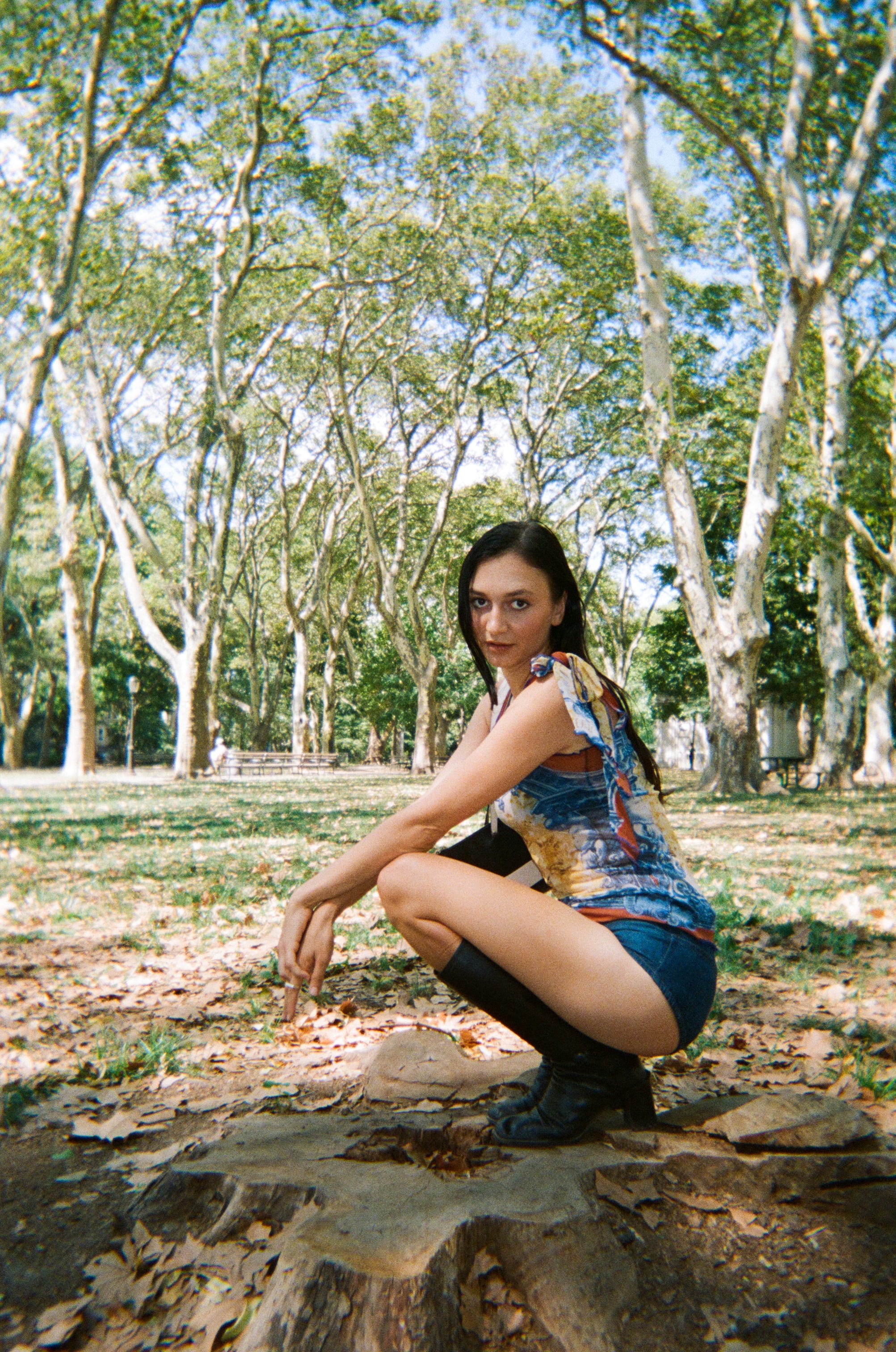
And challenging the traditional power dynamics of being in a straight relationship? It’s almost like the opposite of letting go of control.
It’s kind of like, You think you’re the one coming in here? I’m the one with the agency.
What is it like when you have a song you’ve been sitting on for years?
That one was always in the Dropbox folder of stuff that I was considering for release. It didn’t really fit into any of my other projects and I knew I wanted to work on the production a lot, so I ended up bringing in Robin Stjernberg, who wrote and produced “Demise,” and then he also helped out with a few other songs on the album. He kindly agreed to help bring this to the finish line. So that was the glue that brought it together with the rest of the album. But that song, I just knew there was something in it that was cool.
I’m not gonna give up on her just yet. [Laughs]
She’s gonna have her time in the sun.
What do you think this project says about where you’re at in life right now?
It feels like a good marker of the past five years. I have done a lot of personal growth, I’ve been in and out of a lot of relationships, I’ve kind of gone through loss and grief and experienced a lot of things for the first time. It feels like all the things I’ve been wanting to talk about for the last five years. It feels like a good bookend to my early 20s, growing up in LA and finding myself through that.
It sounds like a collection of firsts. It’s almost like you needed to get this out of the way in order to free yourself and make the next thing. Are you feeling that freedom in the music making process, right now?
It definitely feels the most free, like returning to myself in terms of stuff I listened to when I was like 10. I listened to older singer-songwriters, soulful singers, like Sarah Mclachlan. I feel complete freedom, and it’s nice to lean into that and see where that takes me.
Is that what made you want to get into music? The more singer-songwriter artists?
It’s mostly what my parents listened to. There’s funny videos of me online at 10 years old at open mics in Pittsburgh singing “Heavenly Day” by Patty Griffin. [Laughs] It was just what I was exposed to and the way I sing now is influenced by listening to those singers early on.
What does success mean to you now, after having experienced different variations of success?
I feel great when I put out something that I worked really hard on and it feels like I didn’t cut any corners with it. Like with “Infrared,” I was so proud of the video, too. I ended up editing most of that music video and that’s a very new thing for me. I’ve never taken that on. I’m the most passionate about my stuff, obviously, so it’s easier to do it myself, sometimes.
You can tell you’re very comfortable in the visual world of this album. It feels like both a reflection of you, but also pushing you, stretching you a little bit.
Yeah, I’m most comfortable when I’m slightly pushing myself and I think with “Infrared,” we definitely did that. It feels like a weird, creepy, horror movie. But I love that stuff, I love watching movies, I get really into that side of things.
Things that are a bit creepier, it’s the ultimate escapism, like slipping into a world you’re not supposed to experience in your everyday life. When you listen to your old songs, like the big, big songs, do you connect to those? Do you like those songs? Hate those songs?
[Laughs] I have gone in and out of phases with them. I think “Hide Away” is so fun to perform live. It’s really fun to see the crowd do their TikTok dances. “Don’t Let Me Down,” I’m so proud. They’re probably gonna be in and out of my life.
They’re never gonna leave your life.
They’re never gonna leave my life. I’ve taken them out of my set a few times and, I don’t know, there’s something about everyone singing together.
It’s hard to make a song that connects with so many different types of people. Something like “Don’t Let Me Down,” everyone knows and loves no matter who that person is. If you collected everyone in this park, they all probably have a relationship to that song.
Yeah, it’s cool. I think it’s just that anyone who has had stuff out for 10 years is gonna go in and out of phases with it.
Is there a favorite song on the project, right now?
Right now, “Drift Away” is my favorite. We’ve just made a music video for it, so it’s top of mind. I’ve also been thinking about my live set a lot and that one will be really fun to play.
Interview & Photos: Justin Moran
Art Direction & Design: Zach Pacheco
We love Daya!