

WHO'S THAT? Dagger Polyester

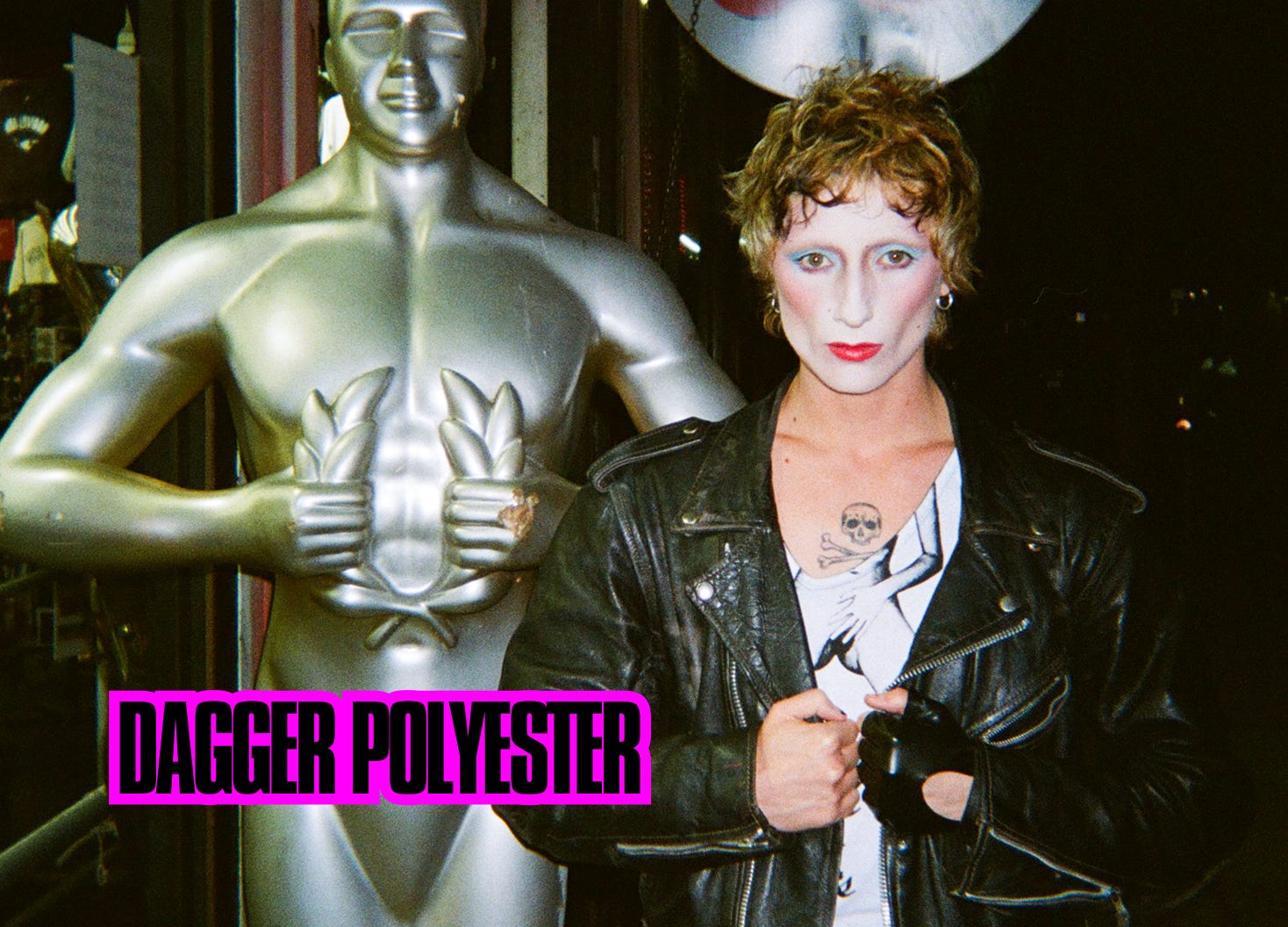
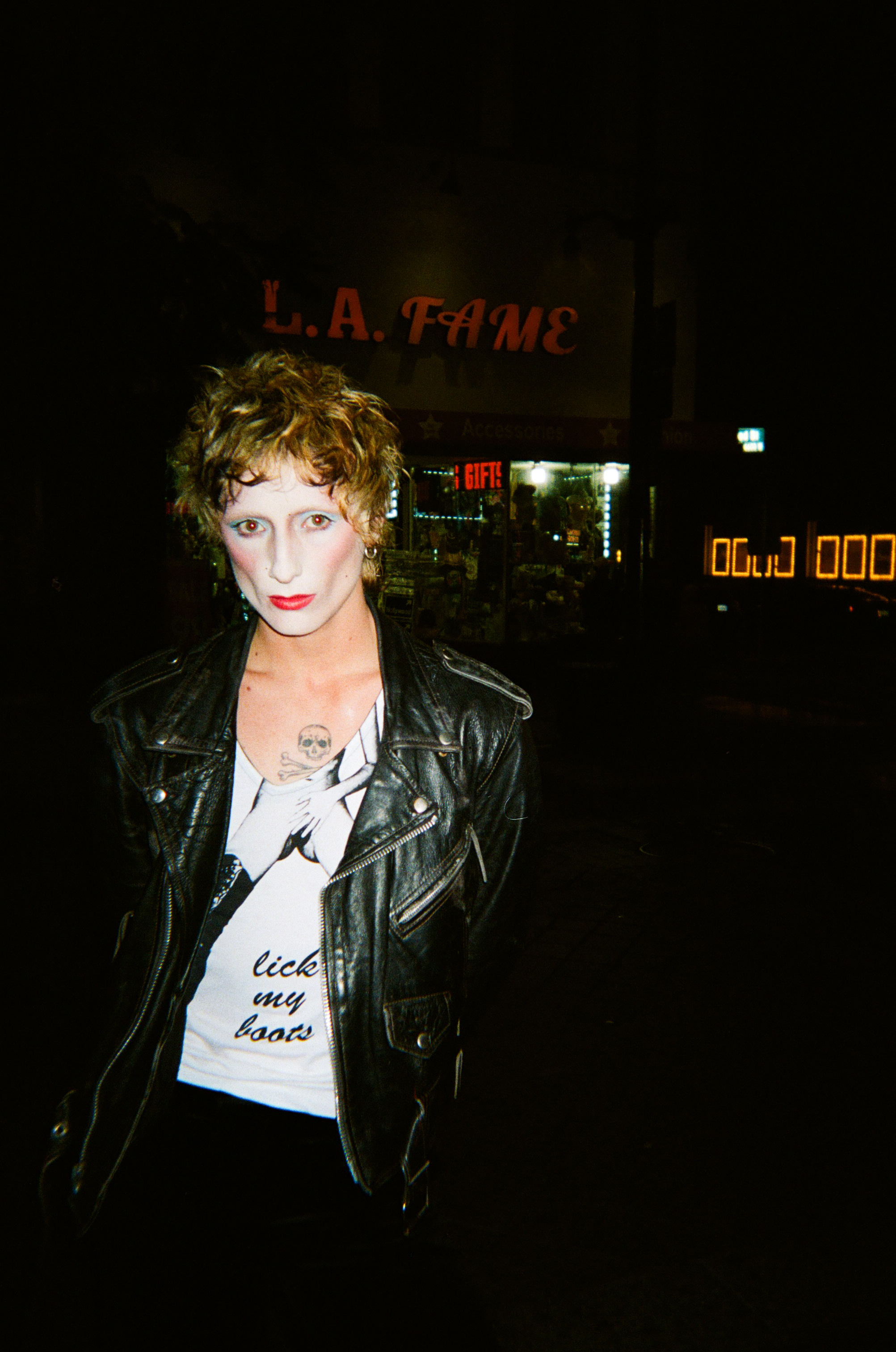
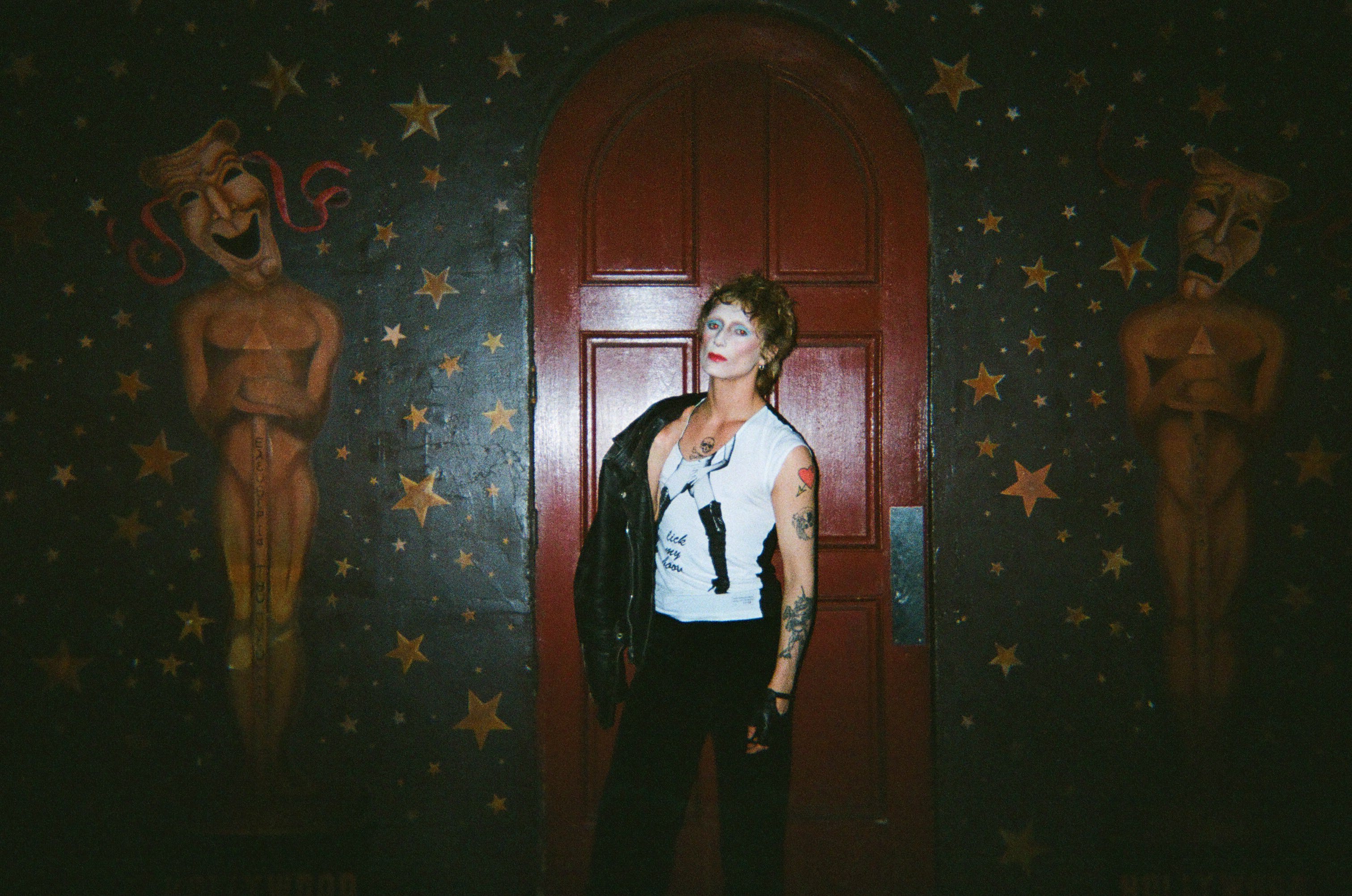
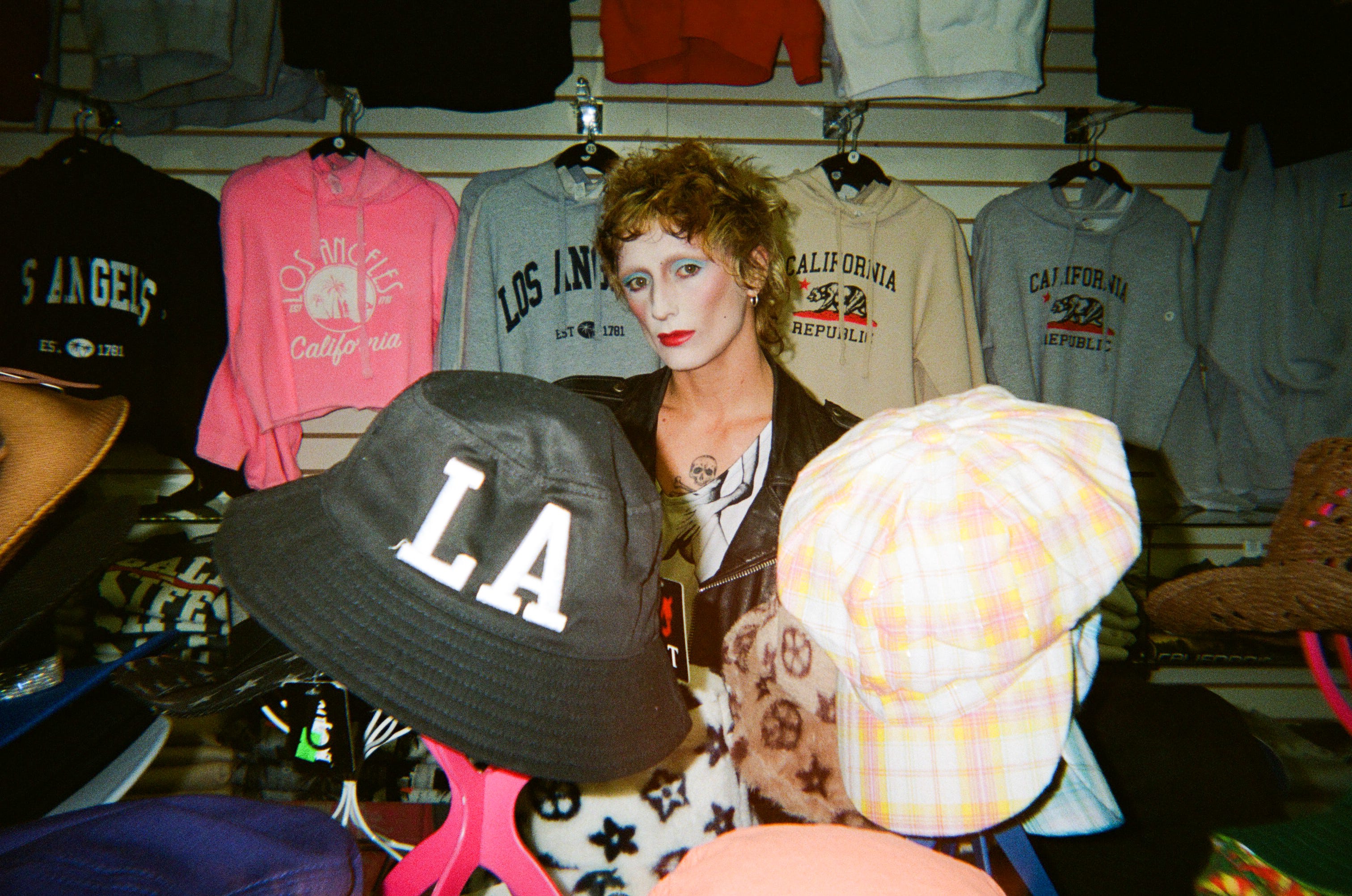
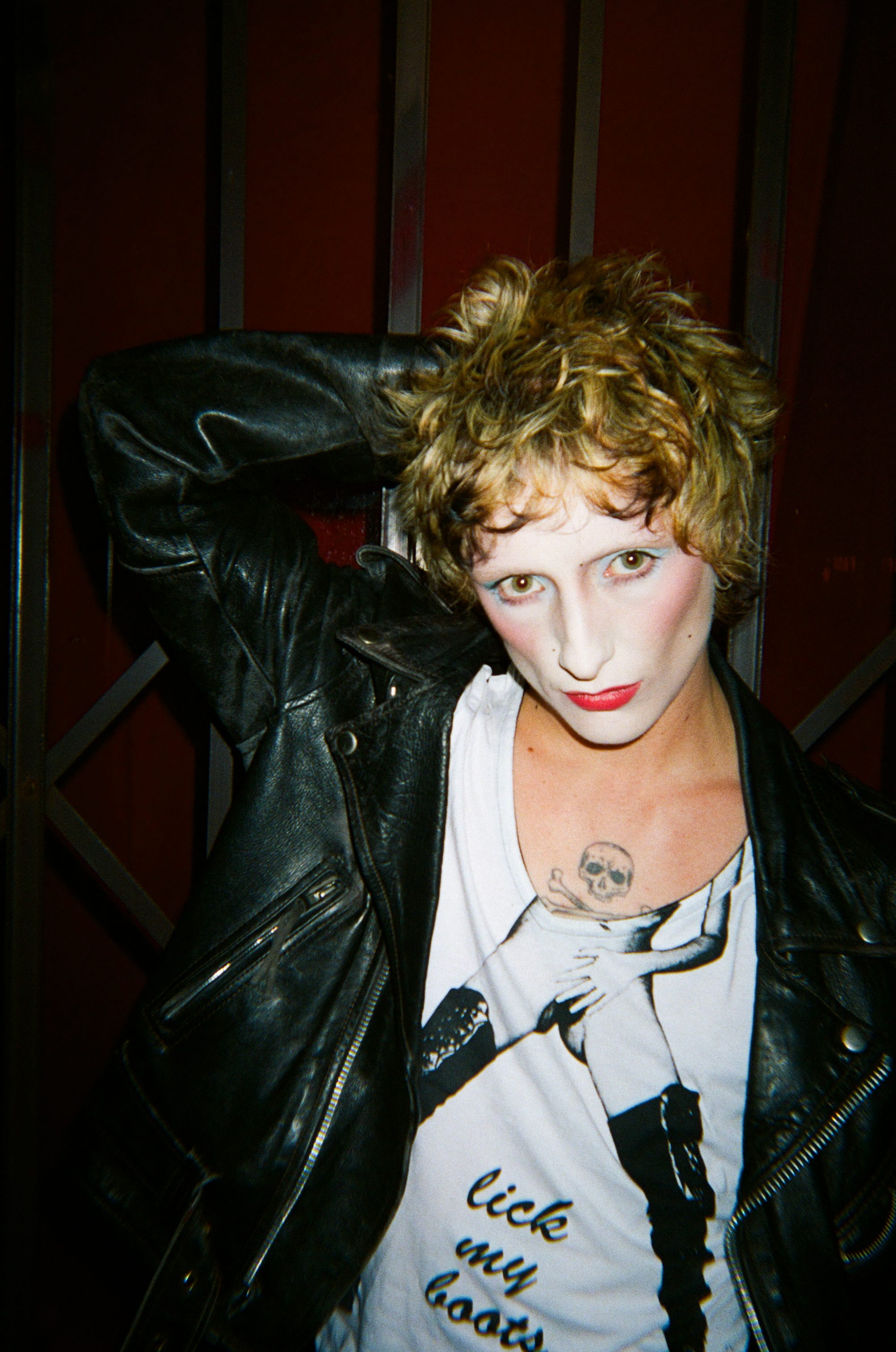
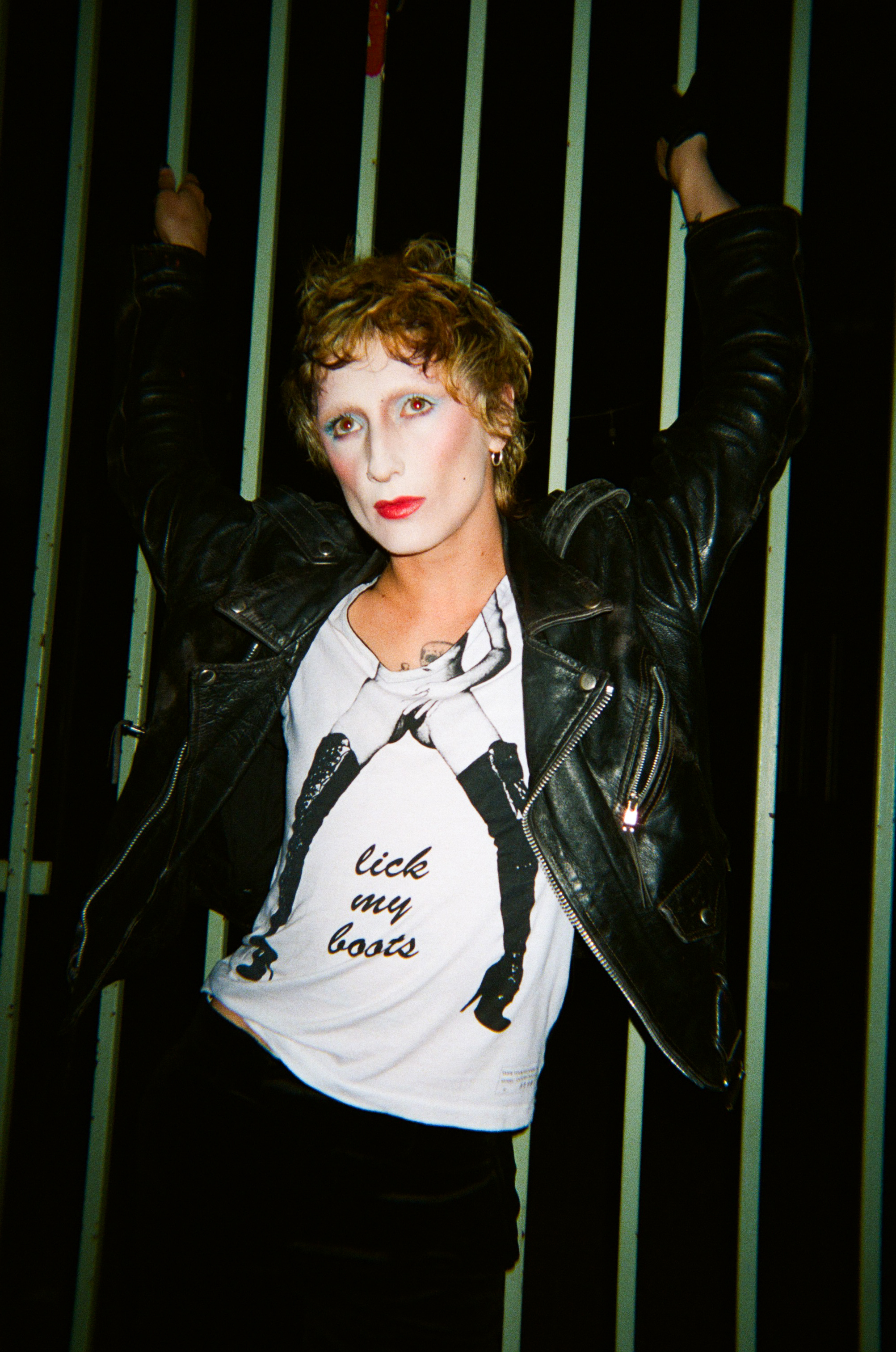
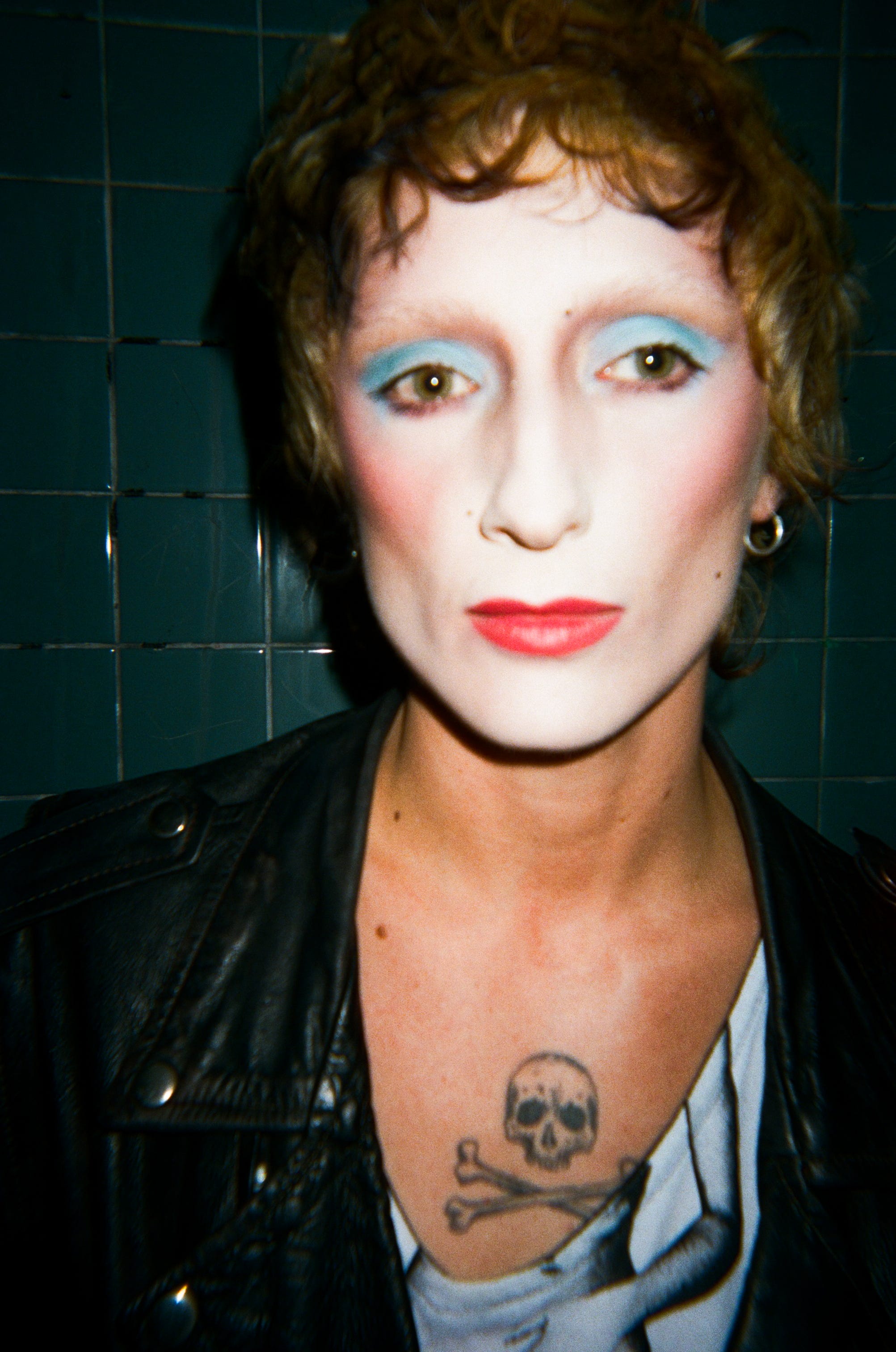
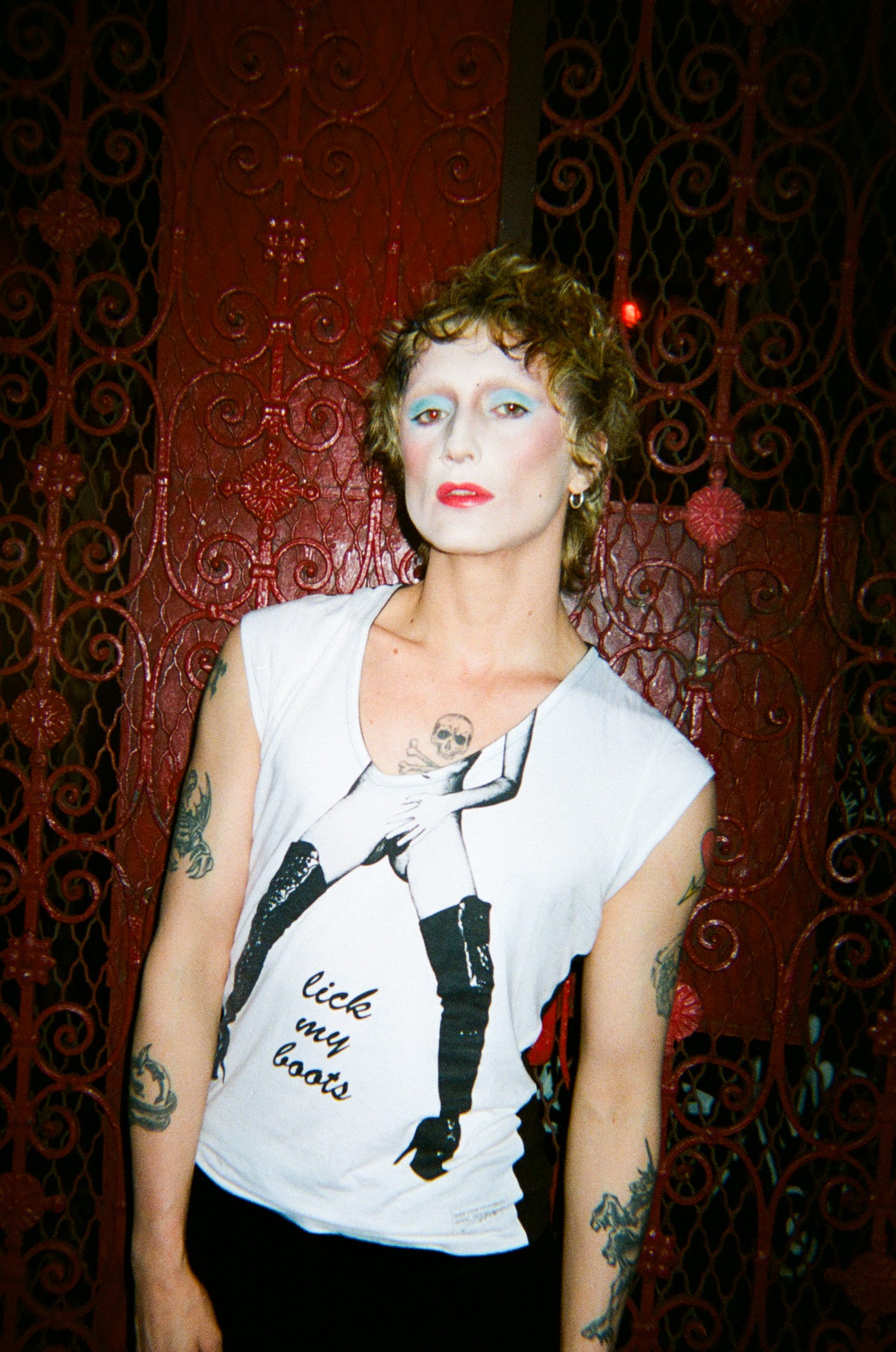
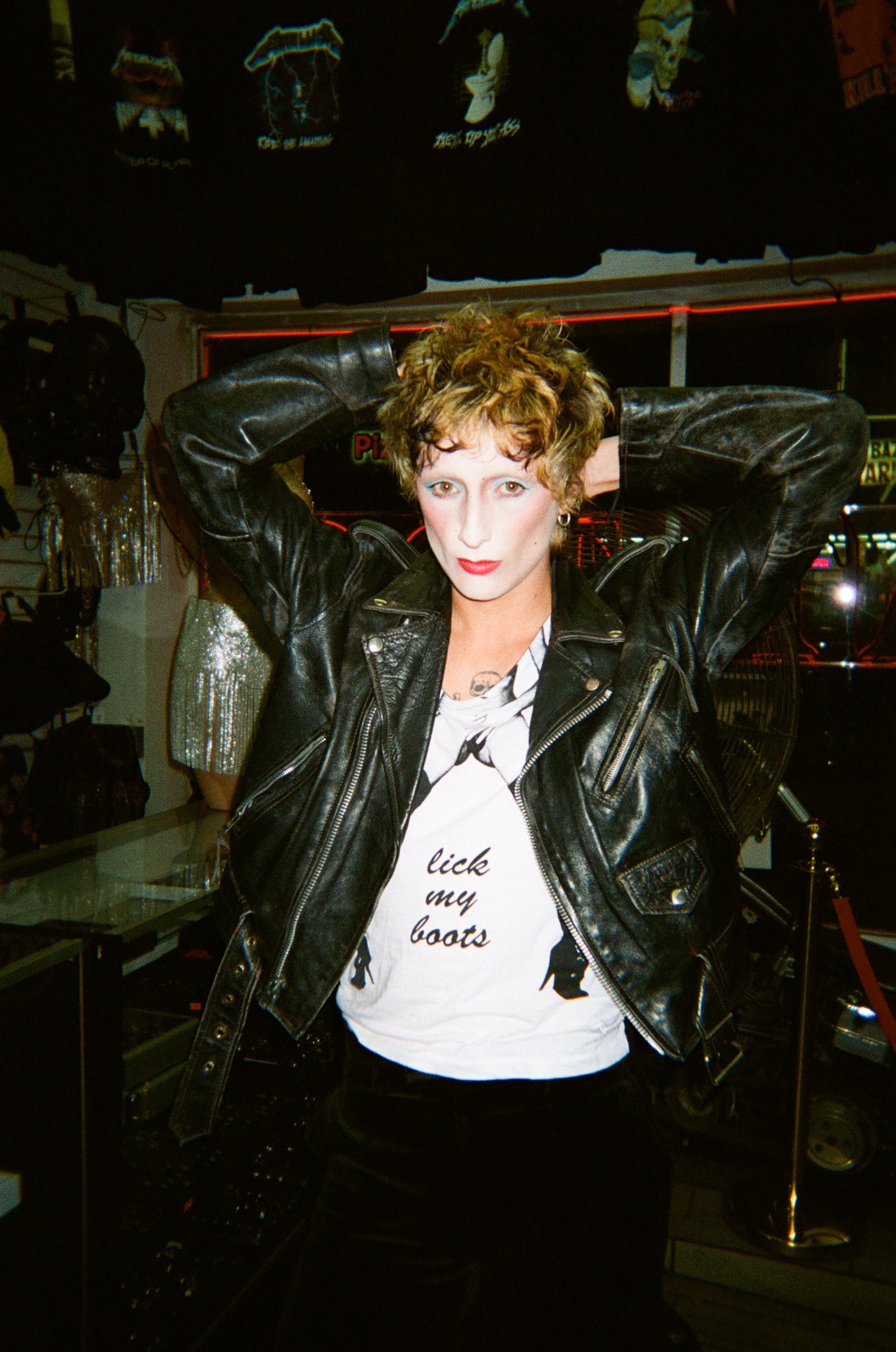
“Have we learned nothing?” opens Perversion for Profit, the debut album from Dagger Polyester — a question sung like an accusation, furious and existential. The LA artist’s glam rock project unfolds like a dramatic musical, with the hedonistic bite of loud mouth punks. Across singles like “Conversion Therapy” and “She Kissed The Gun,” Dagger builds a world that’s politically charged, innately queer and deeply curious about human behavior in its most complicated forms.
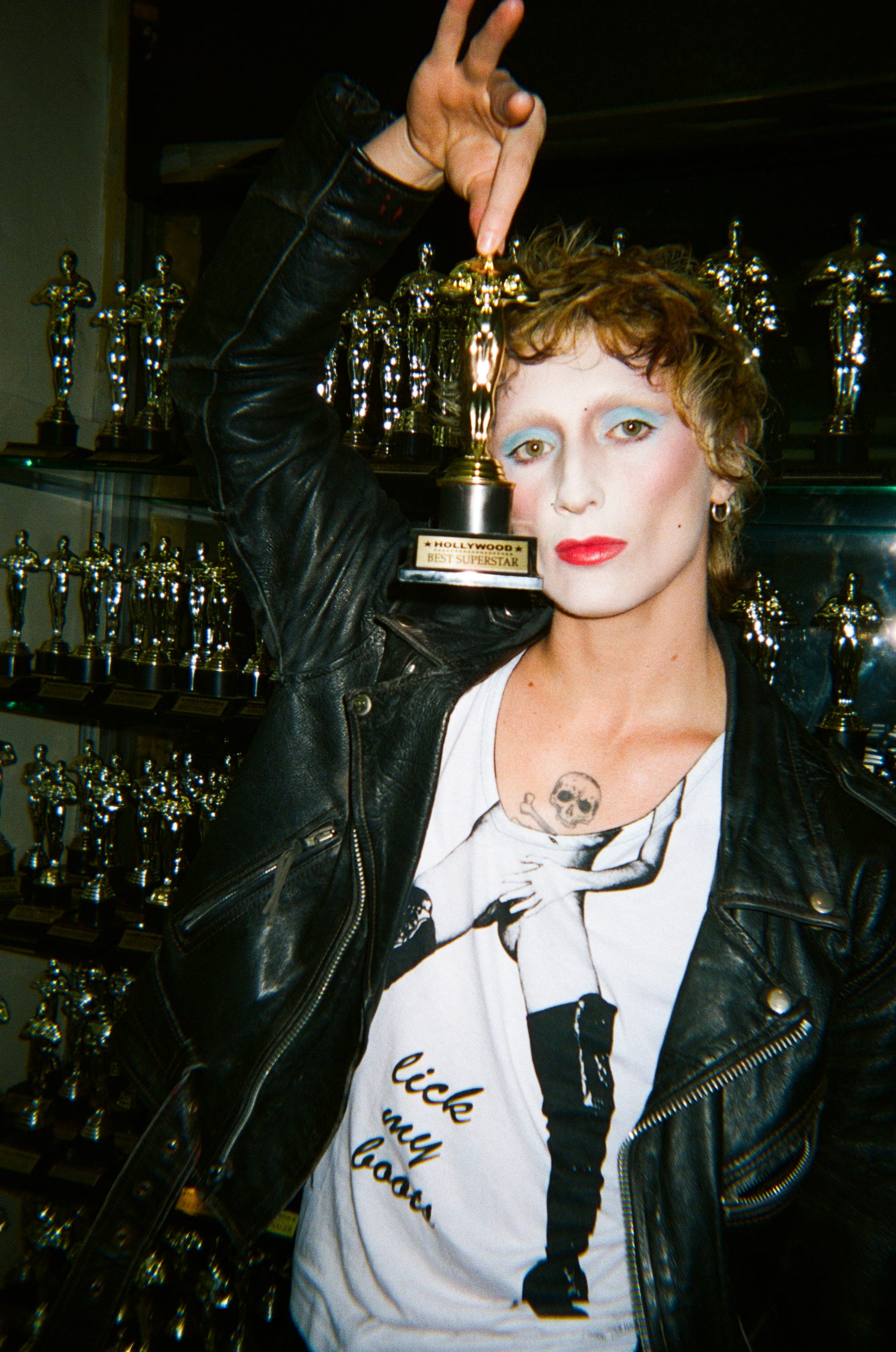
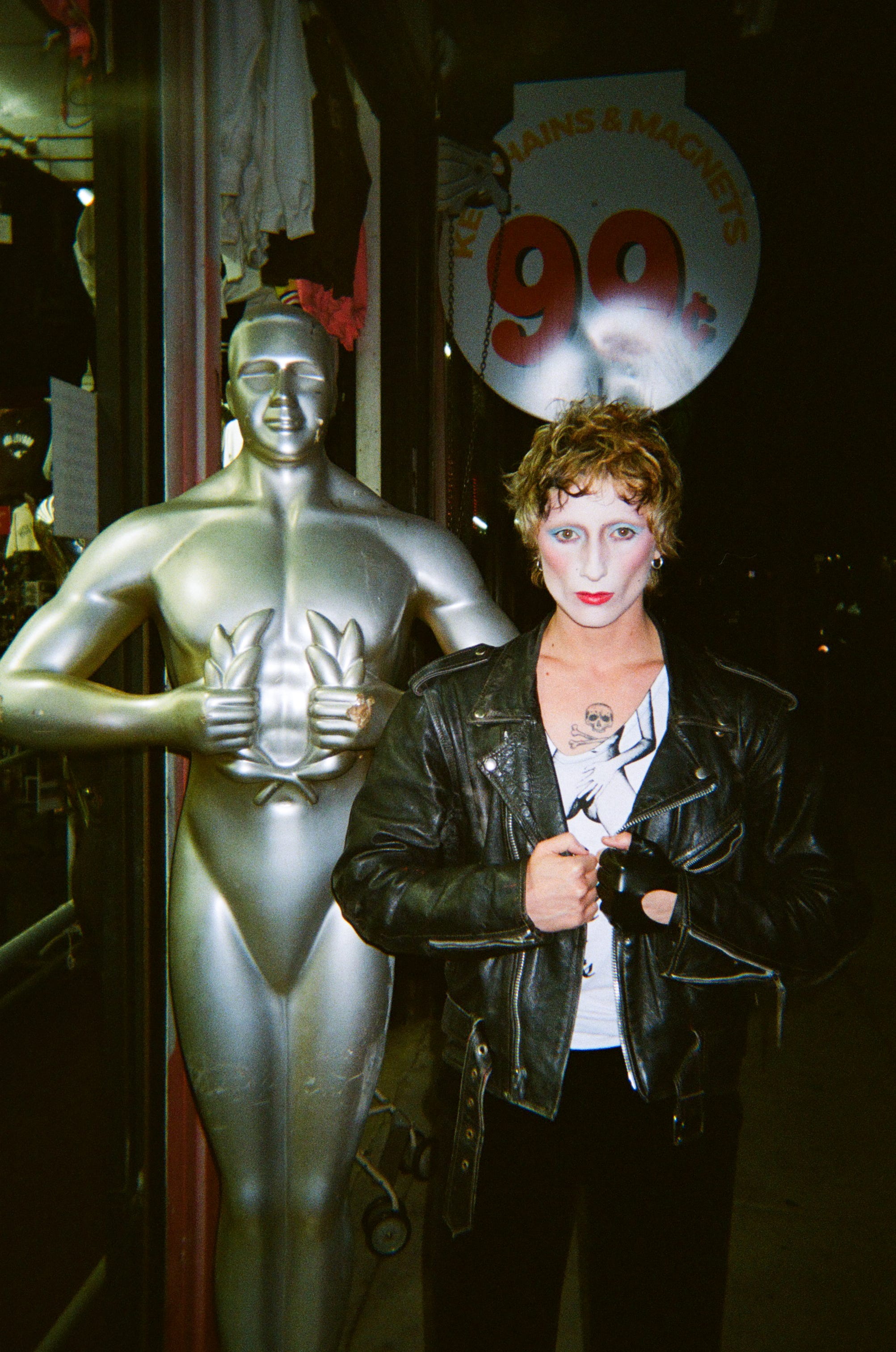
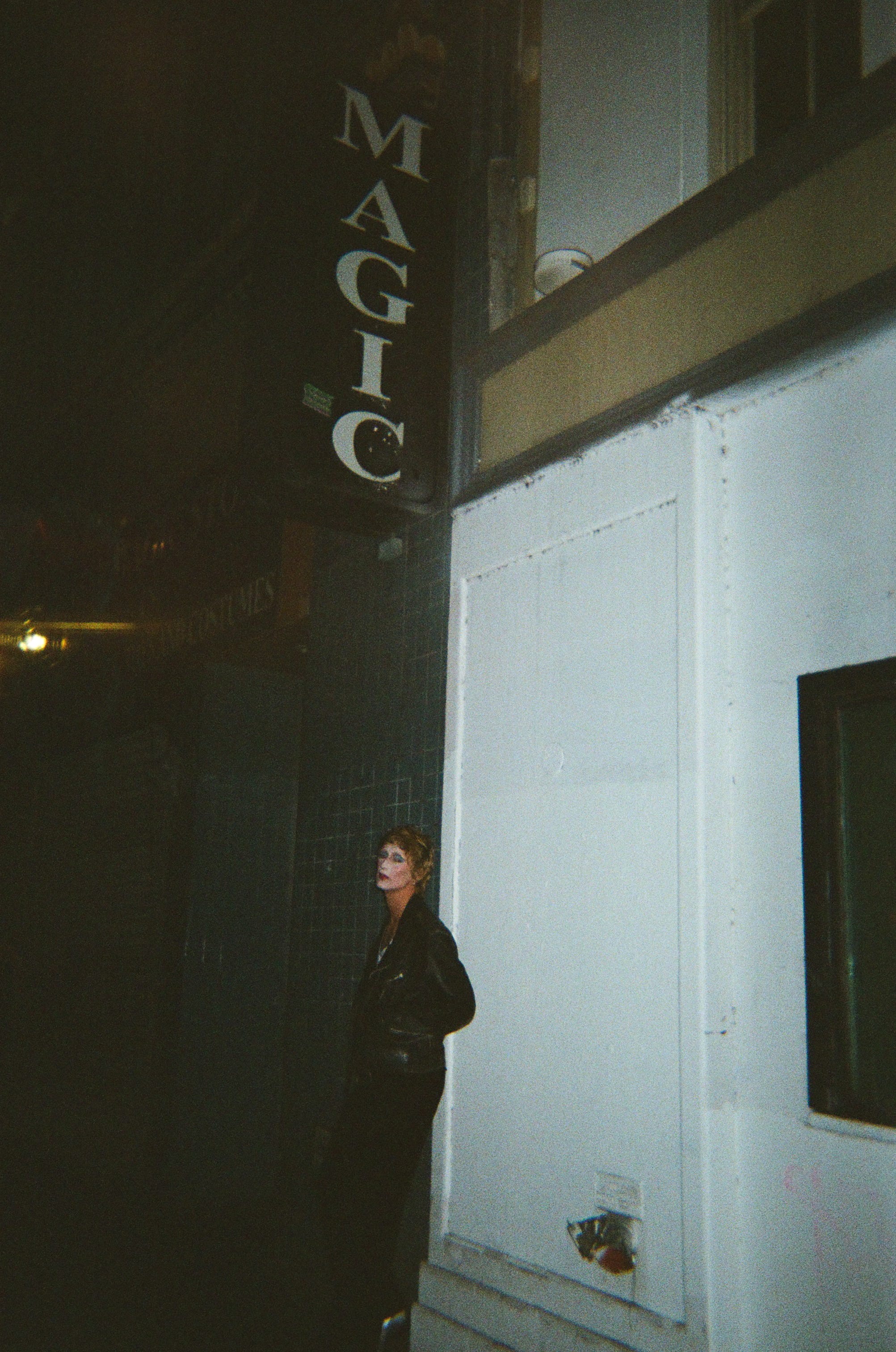
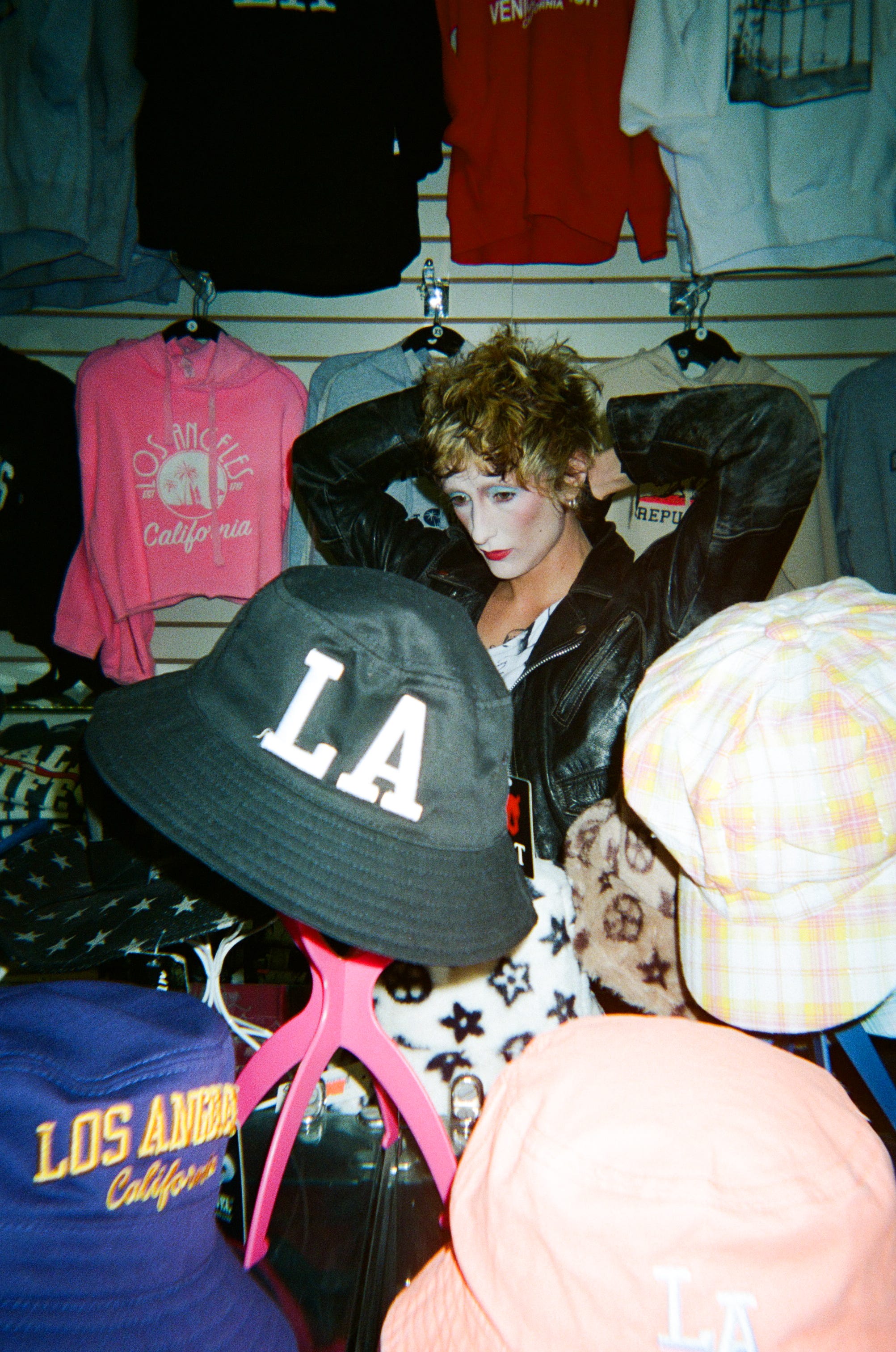
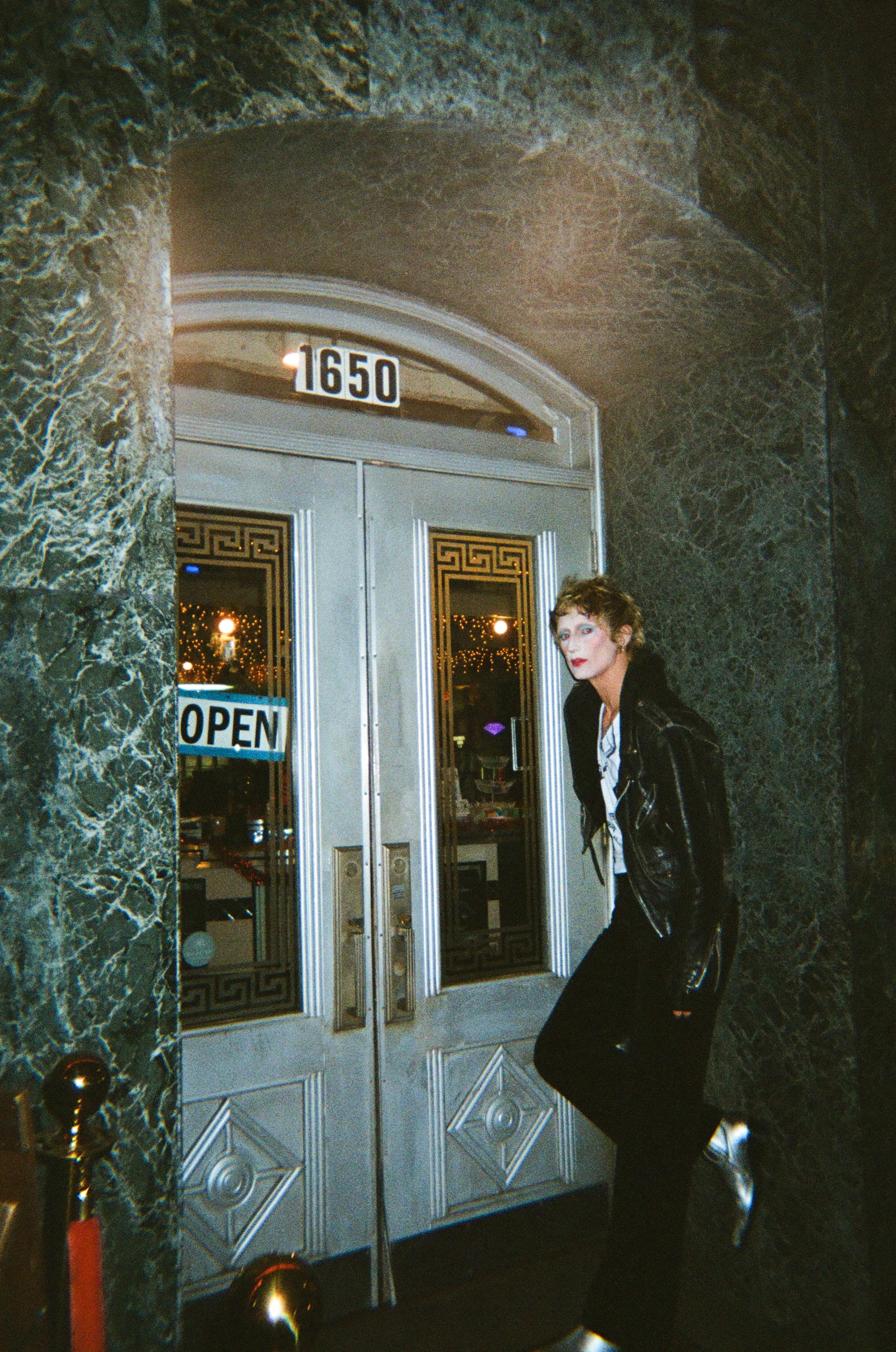
After running around Hollywood Blvd, Dagger and I sipped martinis at Musso & Frank, the neighborhood’s oldest restaurant that looks like a mob movie set. We reflected on their friendship with The Black Crowes’ Chris Robinson, who helped produce Perversion for Profit — and about Dagger freeing themselves from “punk jail” to embrace the softer sides of their personality and interests.
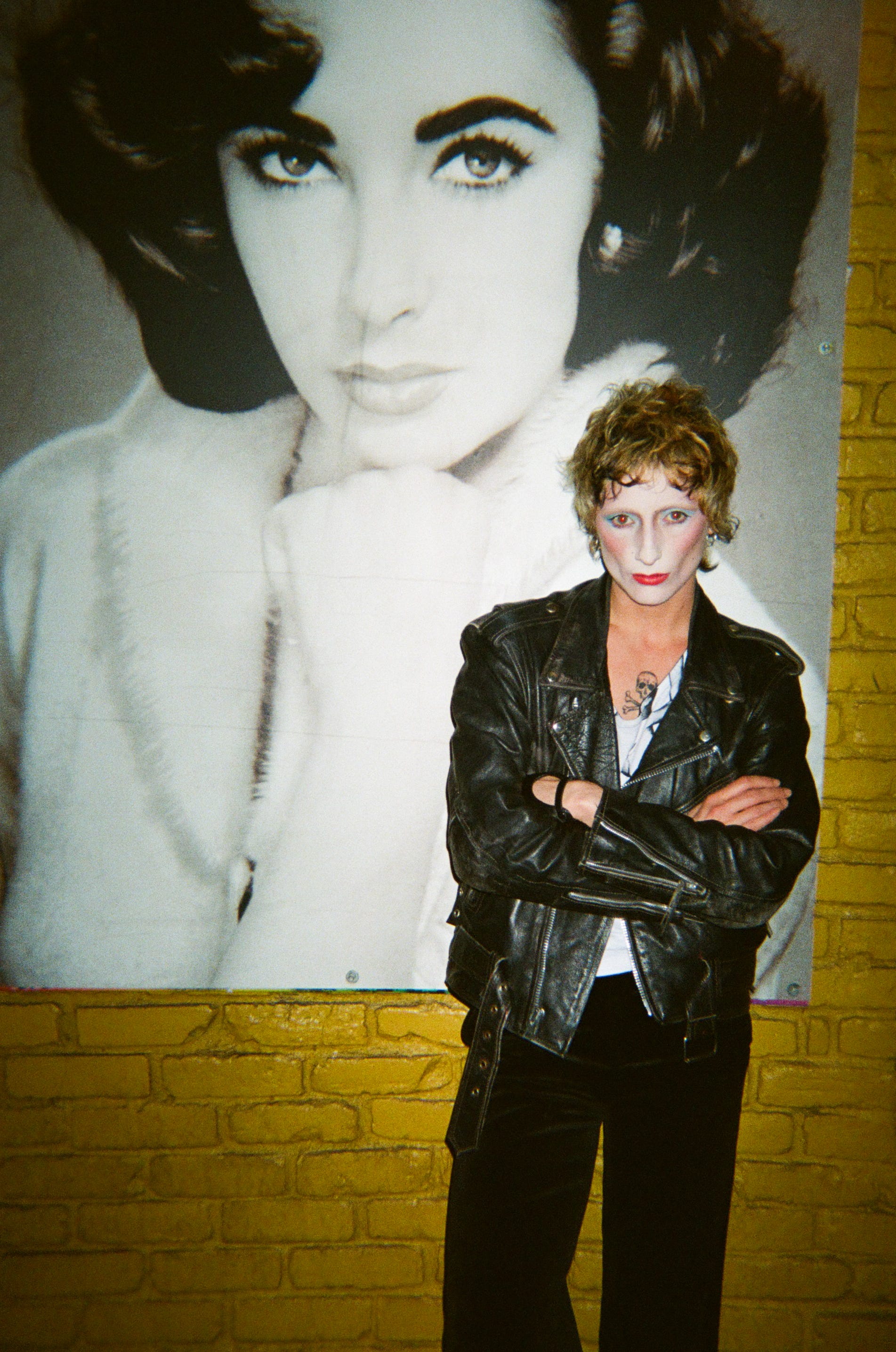
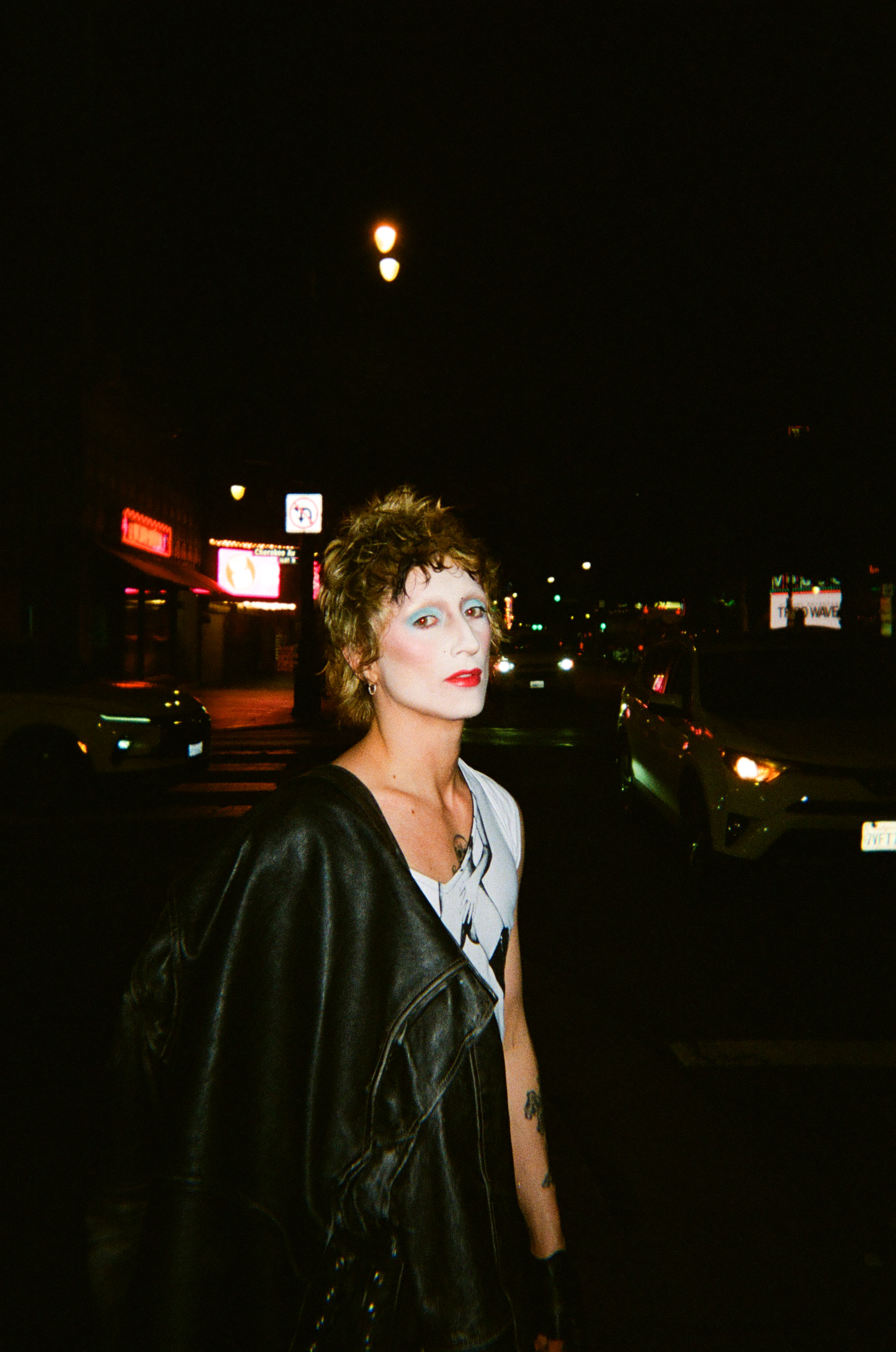
Let’s begin with the LA music scene you’re part of. From an outsider’s perspective, it feels closely tied to the city itself. Do you see yourself as having joined an existing community, or as someone who helped cultivate it?
That’s so interesting. I feel like I’ve been a part of a lot of scenes here. Like, when I was young, I had a techno collective. We were operating out of warehouses illegally and doing generator raves in the forest, and that evolved into punk shows. I felt like all the scenes were really closely tied and there’s a supportive energy here amongst all underground scenes, because there’s a huge media industry here and we’re so separate from it that when you’re a kid, it can feel really daunting and you just take refuge in that scene, whatever it may be. You might be hanging out with kids who make a completely different kind of music with you and collaborating with them. That’s the same for the people in my band, like our keyboardist is an industrial, Skinny Puppy-type musician, and my bassist loves more melodic, the Beatles, classics. It’s always such a mixed bag, it’s hard to look at it when you’re inside it as a scene. It’s just a lot of support and I do love to be the wind beneath other people’s wings. I do love to support my friends and they show up for me so beautifully, it’s hard to leave.
You’re from LA, right? You’ve never left?
I have, but I keep getting drawn back because, again, it takes so long to build a community where you can make really left of center work for free all the time. It’s impossible. When I move, I feel like I have to start over in building that and I have a ginormous wolf dog, so she didn’t like New York.
Cheers.
Cheers, thank you for coming to Musso & Frank with me.
What’s your relationship to music? You mentioned starting out in techno, how did that lead you to the sound and world you’re working in now?
I was couch surfing and living kind of miserably, and I realized I didn’t have to do that. I decided to apply to college after being a high school dropout. So I got my GED and I started going to school. I was really interested in experimental composition, a la John Cage, Morton Feldman, La Monte Young, James Tenney. It was such a serious academic program and I’m such a contrarian that I started to want to make whatever was the opposite of the program I was in. Even though I loved that music, it felt like there were elements of academia that were incredibly white supremacist and classist, and I started gravitating towards glam rock, of all things, really because it was something I’d never explored before. Like, I liked Bowie and Roxy Music and Brian Eno, but I’d never gone into 10cc or strange one hit wonder bands. I fell in love with how they played with masculinity, and it really was something that started as a bit and became real. Then I wrote a rock musical for my thesis project, and I thought it was a bit and then I started performing it. And I’ve just never stopped by accident, but I still feel like I want to go and make an electronic music record or just an orchestral record. It’s just finding the time to wear all those hats, because people want you to be one thing.
It’s interesting that you mentioned being a contrarian in academia, because the work itself feels very studied and intentional — even when it comes across as rebellious.
That’s so nice, thank you.
Contrarianism isn’t one thing. There’s the reckless kind — just fucking off — and then there’s the kind that actually has impact, which requires control. That’s why the work is never fully contrarian, even if the ideology is.
I guess it manifests more in that I’m easily bored, so as soon as I latch onto an idea, I want to subvert it or change it. But that’s slowing down as I get older. I noticed that things are getting more consistent than in my very early 20s and teens. There was a lot of searching and wanting new, and now I’m starting to actually be able to develop ideas and go deeper with them. And that’s just having more patience, and I think, more self love, not wanting to escape myself and put on a costume.
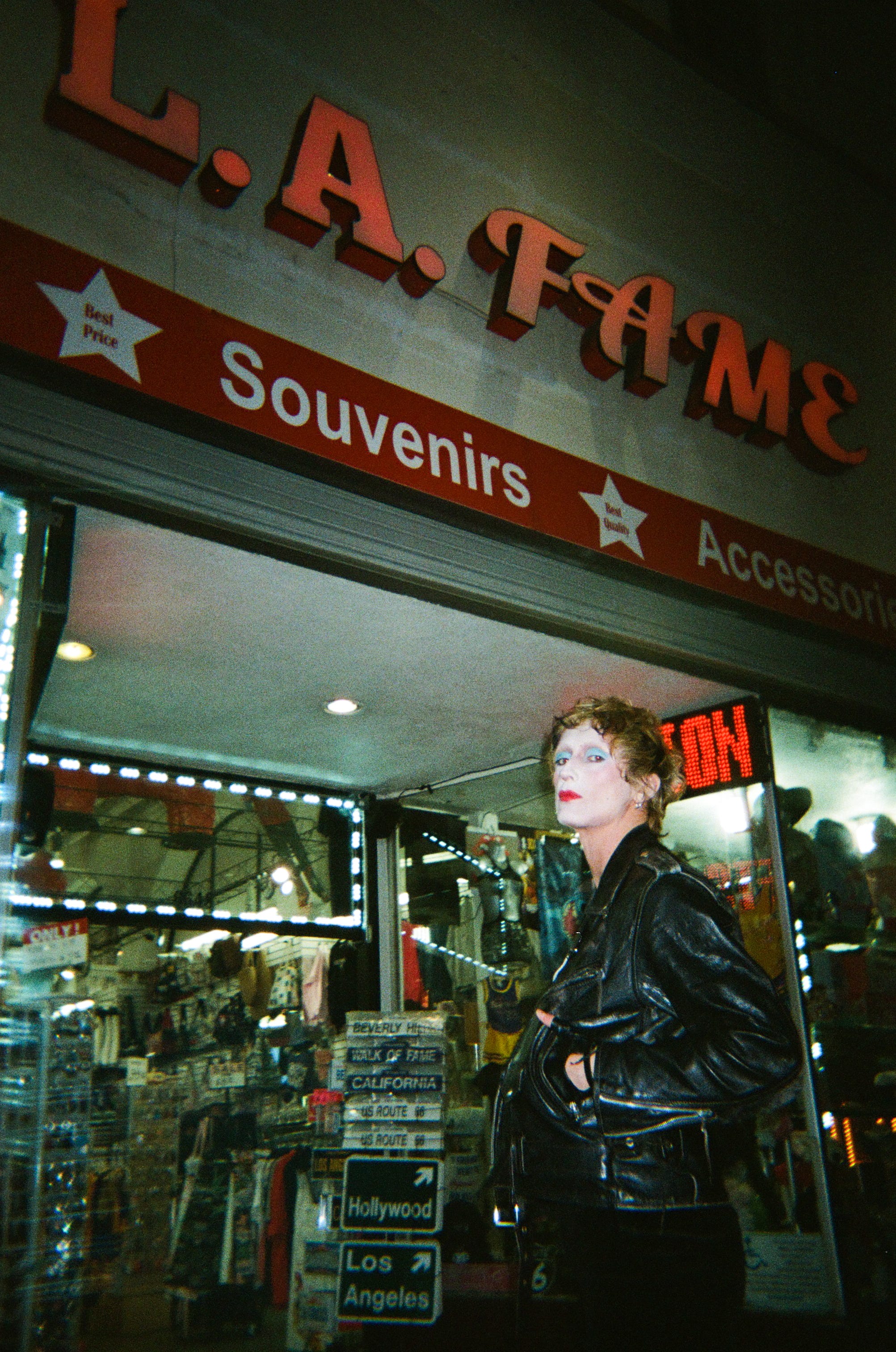
For anyone who’s been othered, there’s often a journey: first trying to escape yourself, and eventually stepping fully into who you are and understanding yourself. At that point, you become incredibly powerful.
Yeah.
What was that experience like for you?
It was really recent, because I feel like I was always really ashamed of my softer qualities, like how I loved musical theater and I loved makeup. I tried to be really hard for a long time, impenetrable and unfuckwithable, and I really wanted to be hard to kill in a spiritual way. And now I feel like I’m softening all the time and opening myself up more. That feels like a homecoming. I’m talking so much more with everyone I know about collaborating on theater pieces now, and that feels like such an insane homecoming. Turns out so many of my friends were closeted theater kids. It’s actually insane, all of us parading around as punks, and then, all the while we know all the lyrics to Company and read Sondheim’s autobiography. So it’s a letting go. It’s kind of letting yourself out of punk jail, where not everything has to be so fucking cool or so fucking tough. There are no guilty pleasures. Indulge in anything that feels right.
It’s interesting that when you say “softening,” you immediately go to musical theater, because there’s a softening of interests, and then there’s also a softening of performance or appearance. How do you define it?
I think any art form that puts up a big front against emotion and sincerity is what I think of as hard and tough, but you posed a great point, which is that being vulnerable is much harder and much tougher, and takes strength. Like, musical theater is sort of inherently and obviously embarrassing. Everyone knows it and it’s why theater kids get such a bad rap. I was always a theater kid that just hung out with the band kids and I was very aware of how I was being perceived, and that’s actually not very cool or punk as you get older, to put up a front and be so embarrassed and edit yourself so much. So I guess you’re right, musical theater is tough. [Laughs] It takes a strong, resilient person to openly like theater.
How has that impacted your live show today and the way you approach those performances?
Completely, always, but I just didn’t realize it, because I script out a lot of my stage banter, sometimes. I’ll have certain shows, like punk shows or house shows, where I don’t care. But if it’s a real production, I have a lot of purposeful mistakes, or I have ideas for, Okay, if this goes wrong, this is what I’ll do. It’s very scripted out. And usually I’ll order the song so they tell a story. I’m sort of meeting that story as the show goes on. I want it to feel like an emotional arc, and the costumes, I guess, is an obvious one. I’m never gonna go up on stage and say, How’s everybody doing tonight? Never.
Well, it’s more of a fantasy.
Yeah, I want to be in the fantasy all the time.
What’s that story you’re telling through the show, broadly, as Dagger Polyester?
It’s different every time with what songs I choose. But lately, the set starts with an orchestral version of “Somewhere Over the Rainbow” that keeps going up and keeps going up, and it gets really stressful. So I ordered the songs to be a twisted acid journey through Oz. And it actually is inspiring a cabaret that I’m writing right now that will literally be theater and scripted and other singers, other actors.
That’s so cool.
The music industry doesn’t interest me. When I think about the accolades of the music industry, like a Grammy or being on the radio, I don’t get excited. But when I think about performing for 2,000 people in a beautiful historic theater, that’s what I feel fire under my ass to go do. Live performance means so much to me, as much as I love recorded music. I want to push it more in that direction, have lighting and sets and have it be completely scripted.
For you, did performing come first, and then learning how to make music and creating it? Or did all of that develop at the same time?
All at the same time. Because my family, on my dad’s side, they’re natural country musicians from the south, and we always would play music together, my whole family. So that was kind of first. But there’s stories of me as a kid bringing a lamp into the kitchen, and getting everyone to sit and put on a show. You know, how it is, tap dancing for the family. [Laughs]
[Laughs] I do know. So what was the early music like?
Oh god. The earliest music I made was shoegaze, and I was really, really, really young. It’s teenager music. I loved Gregg Araki so much that I got really into Ride and I just wanted to make My Bloody Valentine music. So that was really, really, really, I just learned how to play guitar. And then it was all over the place. I got really into metal and then I started making gabber, hardcore techno. And then I was really into occultism and William Burroughs and tape loops, and that got me into experimental composition, just intonation, everything. I had a spiritual period, I was studying North Indian music and ocean music. It’s been, seriously, all over the map. It’s insane and I still can’t believe that I’m making rock music now.
That’s so fascinating. When you listen to Perversion for Profit, it really isn’t just one thing. I listened to it all the way through again today, and particularly on the final track, “Will,” there are these little surprises throughout — unusual tempos, unexpected shifts. It doesn’t feel like a straightforward rock project, so it makes sense that the album emerged from a series of research tangents and interests.
Thank you. I’m glad you hear that, because my biggest insecurity about the record is that we went too on-the-nose with a retro rock sound. That was largely in part because we recorded it in an old-school retro way.
What do you mean, old-school retro way?
We did whole live takes. So the vocals in the record are just how they were. And we recorded through all the analog gear. It went to a computer eventually, but we were at Sunset Sound, and we used everything we could in-house, like they had a gorgeous board. I love the fragility of, you just have this take and you have to make it happen. And I love not quantizing and not pitch correcting anything, because it just feels really subversive and rebellious, weirdly, to just make raw music now.
Oh, it’s so subversive and rebellious, especially in a moment where everything you make can be improved later. That mindset is wiring our creative brains in such a specific way.
Even our ears. What was I listening to today? James Brown or something, and I heard one of the world’s best drummers, Clyde Stubblefield, kind of falter. And I was like, That’s so crazy how much that sticks out to me. Because really, when I used to listen to music, I would never notice that shit. And now that I’m staring at a screen lining up drum beats all day when I was mixing for other people and doing that kind of stuff, it warped my brain. It made me obsessed with perfection to the grid. But the thing is, our ears aren’t perfect. The way that we perceive rhythm is based on our heartbeat and our blood flow and our mood. So there is no way that you can look at a computer screen and make the perfect rhythm or the perfect song or the perfect pitch. It’s all very relative, and it has to do with the shape of your ear canal. It’s so subjective.
So much of the music being made — especially mass pop music — just isn’t resonating. Maybe that’s just me, but it feels like we’re craving a human quality in things right now. Do we actually want perfection as people? Is that what we innately crave? I’m not so sure.
I think it helps us numb out. It’s very aesthetic, we can think less. I honestly don’t know what the draw is. I try to justify it all the time because I feel bad liking old things. I feel like, if I was born in the 1920s I’d be a futurist. I’d be down with Ezra Pound, and I’d want to be pushing things forward. But now that we’ve sort of arrived at this mythological future we’ve been writing about and dreaming about for 100 years, I think the retro thing is less of a, I yearn for the past and the way things were, and more of trying to connect to something new.
It’s not nostalgia for nostalgia’s sake. So when you made this music, did you set out to make an album? I know you worked with–
Chris Robinson [from The Black Crowes].
Which is major. How did you meet him?
I don’t perfectly know the story. I’ve lied and made it up like, 1,000 times. But for the sake of sincerity and vulnerability, like we were talking about, I don’t know how I met him. He’s a very curious person and he wanted to know what’s happening with the underground in Los Angeles. He lives here, he’s been here for so many years. Him and his wife came to one of my shows. I believe we had friends of friends. I think it was his wife who convinced him he should make a record with me. So I actually played him all of these random songs. He’s very decisive and he said, I want this song, this song, this one, and they all were from all over the map in the years that I’ve written songs and the genres that I’ve written in. Those songs were locked and loaded, we were just gonna do them as is. But I had to write four songs as buffers. It was tough–
To sort of connect all those different worlds.
Like, this sort of Buzzcocks-y song would make sense to bridge the gap. Like DJing, I had to conceptualize what type of song would be good as interludes between the very dissonant songs. The last song of the record, “Will,” is completely different than the rest of the record,
It is, but it isn’t.
Good, so I succeeded.
Outside perspectives are so important. Chris clearly saw something he liked and recognized the world as a whole. When we’re too deep inside the work, it’s easy to lose sight of that bigger picture. To me, Perversion for Profit sounds like a very cohesive project.
Wow, thank you. Yeah, I think I was too inside, and I actually haven’t listened to it in a year.
Really?
[Laughs] Because I can’t. Once I finish something, I’m like, Bye.
Why? Because the elements of perfection torture you?
Perfection by a very strange imperfect standard. I have an ideal that is probably impossible to reach, just like anyone else’s ideal, but there’s very little to do with everything being perfect by normal standards. I honestly would have pushed it stranger if I could have, but the service that Chris did me as a producer was he reigned me in and was like, Not everything has to be shocking and not everything has to be dissonant and hard to listen to. You can let people like what you do and enjoy what you do. And it was therapeutic to let him censor me in that way, because normally I would buck at that, but I trusted him so much as a friend. We were such good friends by that point already that I knew that he meant something deeper than just the music.
This connects to the softness you mentioned earlier. Not everything needs to be challenging or confrontational. Sometimes the impulse to make something unlistenable or deliberately weird functions as a kind of protection. It keeps you safe.
Totally. It’s like, I know something you don’t know. I’m cool. Fuck you, I don’t need you to like what I do. You can’t fire me. I quit. All that shit. I was so self-sabotaging with all that stuff. I still like that stuff and, honestly, some of my favorite music is so fringe and strange, and no one enjoys it, but there’s a place for both. And I love that he was able to see something in my work that could be kind of palatable.
Or accessible. The fact that you are the one making the music is already something special. There are accessible elements that make it feel safe for listeners to enter, explore, and begin to understand what you’re doing — and that’s a big part of why the album works so well. With that in mind, when you think about this record, what are the stranger or more experimental elements you’re especially proud of keeping in?
“Will,” the last song in the album, just from an orchestral standpoint, it’s very minimal. It was composed over a quartet of strings and a couple of horns, and I was experimenting in that song with a lot of dynamics and space. Something I find that’s really grating about contemporary music is compression and how everything stays at the same volume. So I wanted to bring back the element of dynamics. And when you listen to an orchestral record, a classical record, you can barely hear it at some points, and then all the sudden it’s actually glaring. And I enjoy that human quality, and how it mimics real life and the real living experience of being in the world. So there’s that all over the record, but especially on that track.
I really love that one.
And then “Affection,” it’s a ballad that’s also orchestral, and it’s actually the oldest song on the record. I wrote that when I was 17, and you can tell lyrically, because it’s very vulnerable and teenage in those lyrics. When I was arranging it, I wanted it to be very sparse. It was really inspired by Van Dyke Parks, who’s an incredible arranger. He’s done pop music and experimental music. Honestly, what I think is most experimental about the record is me trying to make normal rock music, because I didn’t grow up listening to that shit. Like, “She Kissed the Gun” or “Cheap,” to me, those are the weirdest songs on the record, because I don’t have much reference for that kind of music until really recently. I almost just wanted to do it to see if I could, like a challenge.
That’s funny. I mean, I love “She Kissed the Gun.” Is there a song on the album that you feel best represents you and what you’re trying to do now?
I think “Conversion Therapy,” it’s the most recent song. Lyrically, I love storytelling, and I love writing from the perspective of someone I don’t agree with, and toying with them. So it was trying to be from the perspective of a conservative, while also acknowledging my own queerness. That dance and that balance felt very tied to the types of activism I did when I was a kid. I did a lot of performance pieces in activism spaces. The record came out like two years after we made it, so it was already an old record. When I wrote it, we weren’t certain that Trump was going to be elected president, but I had been feeling this scapegoating of trans people for a long time, and I just knew that conversion therapy was coming back in a really concrete and obvious way, which has become true. But people were calling me paranoid and saying I was being reactive or, I guess, a reactionary. The people around me, God bless them, were just a lot of rockers who border on Libertarianism, and they don’t want to deal with PC and woke culture. It was frustrating to me that these were my colleagues, and they were blind to the fact that this there was like a whole resurgence of fascism. Also, fascism never went away. It just wore a different mask.
So it’s really about the gay agenda revisited and how that applies to a larger queer umbrella, and the mythology that queers target children being so ridiculous. That’s why the opening line is, Not the children, and it’s kind of a gross, antagonistic lyric, which I love. I thought it was really funny when I wrote it and then I sent it to my mom and my step dad. I thought, Isn’t this funny? And they said, This is really sad. And I thought, Okay, that’s a great dichotomy, because what we know as queer people is that we laugh about things that are very tragic. I somehow distilled that sensibility into a lyric, and that meant everything to me to be able to bring that to fruition through a song. It’s a pretty serious matter that I’m able to have levity with. The music video that we made for it, we used so many themes of Catholicism to say, like, Fuck you, we’re not the one messing with the children, and that was so satisfying. That’s always what I love doing, but it bridges that gap of being antagonistic, but it’s not alienating. Like, it’s really trying to bring in the people who I care about in my community.
Inside the queer community, we often use humor to cope with very serious realities. The issues are real and heavy, but we’re also laughing at them as a way of surviving. There was a recent wave of queer joy and feeling like, We made it, we’re finally safe. Now, we’re realizing that safety isn’t as secure as we thought. As a queer artist, especially when queerness is central to the project, capturing that tension — the joy, the fear, the humor, the grief — feels incredibly difficult to get right.
It’s more nuanced than ever, there’s a lot of moving parts. Also, we see this shift in the queer community about this outcry of wanting, Get that shit off my flag, and wanting the T to be removed out of LGBT. I see some weird hope in that unrest, because a pendulum swing to conservatism means a harder swing to the left. I don’t mind when trans people and queer people, we might feel betrayed by our queer elders when they become trans medicalists or really fixated on what the binary of gender is, because they worked so hard to be trans their whole life. I actually see that as growth and growing pains. As a community, we’re really having to get deep into gender theory because our bodies and our lives are immediately threatened by it and saying, Okay, what does this all mean? What does transness mean? What does queerness mean? It’s honestly hopeful to me. I think we’re gonna see a lot of progress because trans people have to be the new scapegoat. That’s just what’s happening. Politicians don’t really give a shit if you have a dick or a pussy, they really just want to oppress the masses. And as long as we all keep that in mind and we don’t switch up on each other, we can hold grace for each other’s trauma. If a 70-year-old trans person is reading you to filth because they see transness as something else, maybe just embrace them and accept them and love them, because we’re all in the same team. Ultimately, I think we’re going to be okay if we can maintain that solidarity and hold each other accountable and be critical at the same time.
What do you think this album says about queerness when you look at it as a finished product?
The fantasy I want to build out and live is not necessarily, inherently a queer one, but it is because of me. So I don’t think about it on those terms, it’s something unconscious that I’ve had to learn to recognize and talk about because of outside perception. And “Conversion Therapy” is definitely an exception to the rule as a song, and it’s something that I do want to explore more consciously. But before that, I just wanted to make the vaudeville, rock musical music of my dreams, and now I’m starting to hone in on the fact that I really do like writing about human stories and things affecting my community directly. So maybe that’s to come, maybe that’s not fully formulated yet.
When you go to write, are you writing about yourself or are you writing more about ideas?
More ideas. In the early days of songwriting, it definitely was a release and a catharsis and writing about what’s happening. I’m much less interested in myself as a subject now. I’ve lived with myself for a long time, and I’m a little bored and I’d rather talk about the people I’m interested in. I just wrote a song about a girl I had a lost weekend with. She was such an interesting girl. I met her in Memphis and I was so enthralled by her, I just followed her around for two days. I stewed and sat with it, and just wanted to immortalize that weekend, that moment with her and her life. And that’s more what interests me now, because once you’ve been through a breakup, like four times, you’re kind of over thinking about it or talking about it, you know?
There’s only so much ground you can cover with heartbreak and love. Weird people’s real life stories are way more interesting.
Yeah, and all the people I love are weird because I’m weird and we attract each other. So fortunately, there’s a lot to draw on and learn from others. I also love making up stories. I have a song on the upcoming project that’s all about a man who privately owns a prison and he’s secretly really into BDSM, dressing up as a prisoner and having his dominatrix treat him like one of his prisoners. He visits the jail to do these studies about what he needs to go buy. He buys these expensive sex toys to go replicate the horrible, painful conditions his prisoners are in. He goes to his penthouse and gets flogged and beaten.
It’s interesting to think about translating that idea into a song. [Laughs]
Yeah, fair. [Laughs] A lot of rhyming.
It feels like there are two broad approaches to songwriting: one that’s more pop-driven and simplified, and another that’s more poetic and narrative. Your work seems to land somewhere in between, but maybe you’re not thinking about pop at all?
I’m not. But that doesn’t mean I don’t like pop, I just know that I have nothing to contribute to it.
Is that true, though?
I don’t know, I don’t think so. I’ve never tried to make pop, and I don’t know why. I’m just not drawn to it, I guess.
When I think of pop, I’m not necessarily thinking about a sound. I’m thinking about communication, connection, community. So in that way, I do feel like there are pop elements in what you’re doing.
I would love to make pop. I loved when The Dare came out with “Girls.” I was so blown away and so impressed, because I thought it bridged that gap perfectly between the underground and pop. And I would love to be able to do that. Maybe I just don’t have the confidence yet in that realm. I feel like it’s tough to do with real musical instruments and real live recording. Maybe I would have to transition into a different kind of production style, which I’m completely open to. But it’s tough because I think the defining feature of anything that is pop right now is a complete digital compression. It’s really more of a sonic element than it is aesthetic. Everything kind of sounds in the same realm, it’s a mastering and production thing.
Maybe I’m just projecting my own personal ideals of what I want pop to be. [Laughs]
[Laughs] You’re like, Don’t you think you could be pop 20 years into the future, in the way I’m picturing it? That’s very cute, though. I would love to see your ideal pop music world in 15 years.
Well, it’s people like you. In my mind, it’s you with a massive audience. It’s not that your work is alienating — I think building and finding an audience in 2026 is genuinely difficult unless you’re willing to play the game, in some way.
I am not playing the game. People keep telling me that I’m getting in my own way and self-sabotaging by not playing the game, and I keep trying to fucking tell them I don’t know how to.
[Laughs] You’re like, I’m not resisting.
I just don’t know how to fucking do it. Not everyone used to be their own PR person and content creator, whatever they call them. What if you met Richard Hell in New York in the ’70s, and you loved him and thought he was so cool, but he had 200 followers on Instagram, he would get nowhere. And that’s uncanny and crazy to think about. You think about personalities like Richard Hell, Patti Smith, any of the giants of that era, and there’s no fucking way they would be adept at promoting themselves. There was an industry in place for that. I’m not saying I’m on their level by any means. I’m just saying I’m born with the same deficiency in self-promotion. I don’t give a shit about it and it’s hard to try to. But I admire my friends who do it, I’m not knocking it. It’s an art in itself that I don’t have the talent for.
For you, what’s the big-picture dream for Dagger Polyester as a project? What does that look like?
It would be amazing if Dagger Polyester, as a project, was a rotating cast a la Os Mutantes or Funkadelic of really talented people who were afforded the opportunity to go on world tours with this live show, and it operated more as a cabaret, Like, Dagger Polyester Presents, and it would be my songs and other artists who wanted to come perform and drag queens and all kinds of performance artists. With the recorded records, I don’t know if there’s a goal, other than I need a lot of money to actually hire a real orchestra, so something that would make enough money to get a philharmonic.
That would be amazing.
Yeah, to have more than four string players at a time would be incredible.
That would be cool — like a one-night-only event. A really expensive, really luxe one-night-only. [Laughs]
And then that could be live recorded. I’m not so gung ho on, again, awards or career goals. I just like making big, larger than life projects happen, whether it’s for me or other people. Really, it’s better with other people too. What is that saying? A rising tide lifts all boats? That’s what brings me the most satisfaction, putting on my talented friends at the same time as performing my own music.
So Dagger Polyester feels more like a lens or a point of view, where lots of things can fit inside it. It’s not just you alone.
I’m Dagger Lee Hicks, but Dagger Polyester is supposed to be, like a play or something that a lot of people can join. I don’t want it to be restricted. Also, I’m not interested in having a pop persona. That’s maybe the thing about pop that feels alienating to me, is you have to box yourself in and become a caricature. That sounds really stressful. There’s an expectation there that no one can ever meet once they’ve built something.
You feel like there’s no separation between you and the work at all?
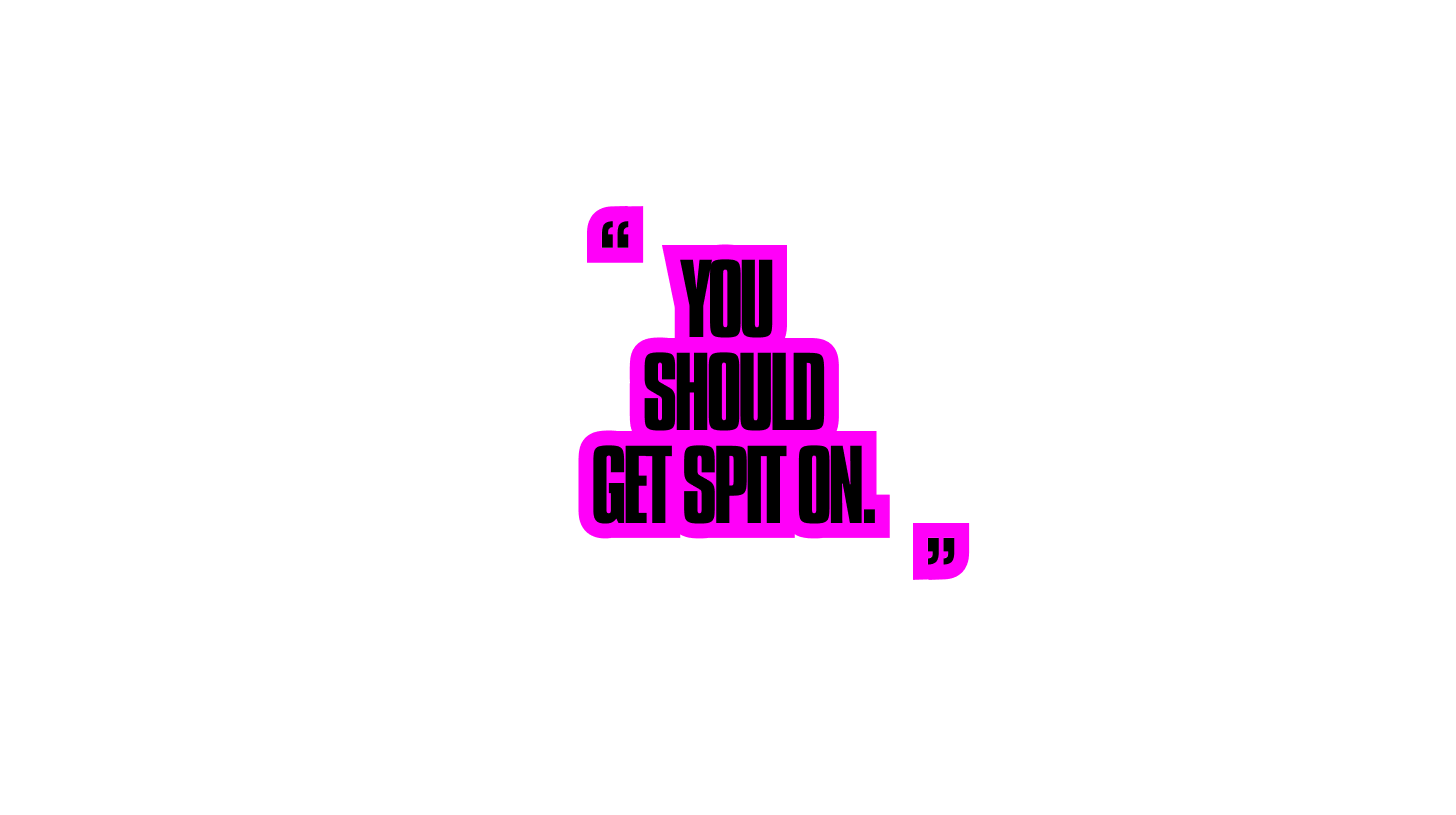
No, unless I’m on stage, not really. Not in the studio, not in my life, I try to only absorb helpful information. Everything I read and look at and listen to, I want to be fruitful for the creation of what I want to create. I’m very sensitive to what I’m around and where I go, what I listen to, because I feel like it’ll inform what I’m doing subconsciously. So it’s kind of on all the time. I try to live in the fantasy all the time. But also, I spit on people on stage and I’m not gonna do that on the street. [Laughs] I’m respectful.
I haven’t been to one of your shows.
You should come, you should get spit on.
That’s enticing. [Laughs]
It’s free, or $15 depending on the show.
Interview & Photos: Justin Moran
Art Direction & Design: Zach Pacheco